
Dong Nai is calling for adjustments to the scale, training fields, and curricula of vocational training programs to meet the city's development needs. To this end, training institutions need to strengthen ties with businesses and align their curricula more closely with practical needs, helping learners develop solid professional skills, adapt to their jobs after graduation, and gain opportunities for long-term career development. After all, securing employment and a stable income is the shared expectation and goal of vocational students.
Learning through practice, confidently entering the workforce
Having recently graduated with a degree in pharmacy from Dong Nai Medical College, Vo Nguyen Ngoc Thy, 21, a resident of Tan Trieu Ward, has already secured employment at the facility where she completed her internship during her studies. Thy said that throughout the course, the curriculum maintained a balanced combination of theoretical instruction and practical training. Theory provides the foundation of knowledge that students must thoroughly understand to keep pace with their work and acquire new knowledge. Combining theoretical study with hands-on experience in a real working environment helps students retain knowledge longer, improve their professional skills, and gain confidence when entering the workforce.
"Practical courses are highly applicable and can expose students to around 80% of the actual tasks involved in pharmacy, depending on the specific field. Practical training and internships provide direct exposure to work, enable students to observe professional procedures, and reinforce theoretical knowledge. By my third year, I had decided where I wanted to work, so I made a careful plan for my internship to gain experience, apply what I had learned, acquire practical knowledge from the workplace, improve my skills in advising and communicating with customers and deepen my knowledge of medicines, and learn to handle real-world work situations. As a result, I encountered no difficulties in finding a job and secured employment immediately after graduation," said Thy.
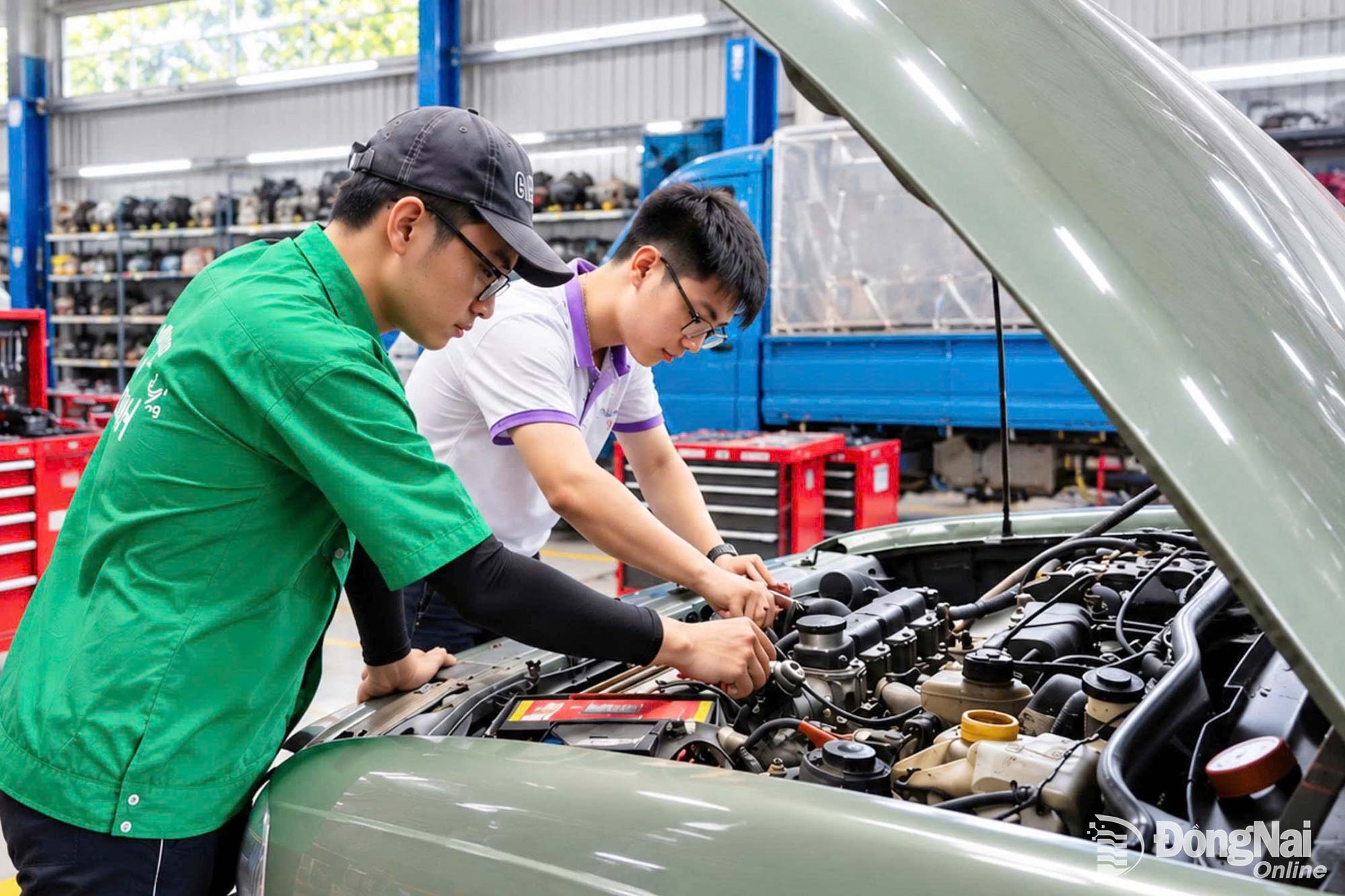 |
| Students enrolled in the 9+ vocational education program at Ho Chi Minh City College of Commerce and Industry – Dong Nai Campus practice at an automotive repair workshop. Photo: Bich Nhan |
Nguyen Hoang Long, a resident of Trang Dai Ward, Dong Nai City, who is enrolled in the 9+ dual-track vocational program in industrial and household electrics, said he has always enjoyed tinkering with and repairing household electrical appliances. His uncle, who works in electrical automation, therefore encouraged him to enroll in vocational training in the electrical field. In addition to classroom lessons and practical training, Long spends two hours each evening working and learning at a private enterprise near his home. "Connecting electrical circuits, soldering wires and working with machinery help me better understand what I learn in class, recognize gaps in my knowledge and identify mistakes to avoid. Besides gaining practical experience, I also earn 120,000 VND per session, which I use to cover my study expenses. After graduating with both a vocational diploma and a high school diploma, I plan to continue my studies at a vocational college to expand my knowledge and take on work requiring more advanced expertise," said Long.
According to a report prepared by the Dong Nai City People's Committee for an October 14 working session with a delegation from the Ministry of Education and Training, the scale, occupational structure, and quality of local workforce training have not kept pace with economic growth or the requirements of transitioning toward a growth model based on science, technology, and innovation. The report identified significant shortages of highly skilled workers in fields such as artificial intelligence, data science, semiconductor integrated circuits, digital logistics, aviation, automation, mechatronics, and green technology.
Consequently, in the coming period, Dong Nai will focus on investing in vocational education institutions capable of playing a leading role, as well as national and regional vocational skills training centers. The city will also work with enterprises to develop curricula, organize practical training, assess skills and recruit workers; strengthen labor supply and demand forecasting; commission training programs; and publicly disclose employment outcomes after graduation.
Before choosing to study automotive maintenance and repair, Ha Anh Kiet, a 12th-grade student at Ho Chi Minh City College of Commerce and Industry – Dong Nai Campus, surveyed recruitment demand in the labor market to determine his future career path. Practical training sessions at automotive workshops have given him a clearer understanding of his chosen profession. Kiet said, "Seeing the rapid development of automotive technology, I am confident that I will have no difficulty finding a job to support myself and my family. Extensive hands-on training enables me to apply theoretical knowledge to practical tasks and acquire new skills. I often stay after class to learn more about components that are unfamiliar to me. Although I want to start earning an income soon, I still plan to pursue an associate or bachelor's degree in this field to further improve my professional expertise."
Aligning training with labor market demand
Dr. Le Trung Tin, Rector of Ho Chi Minh City College of Commerce and Industry – Dong Nai Campus, said that the Ministry of Education and Training is currently directing efforts to improve the quality of vocational education, focusing on workforce training that meets labor market demand while promoting digital transformation in teaching and administration. Therefore, vocational training institutions must adjust their curricula and increase the time allocated to practical training and internships to ensure that graduates can immediately adapt to working environments at enterprises. "Enterprises are also applying increasingly rigorous and practical recruitment criteria. Therefore, our institution places strong emphasis on training based on market demand. Drawing on specific job requirements and actual equipment used at production facilities, we adjust specialized course content within the curriculum to help employers minimize the need for retraining after recruitment," emphasized Dr. Le Trung Tin.
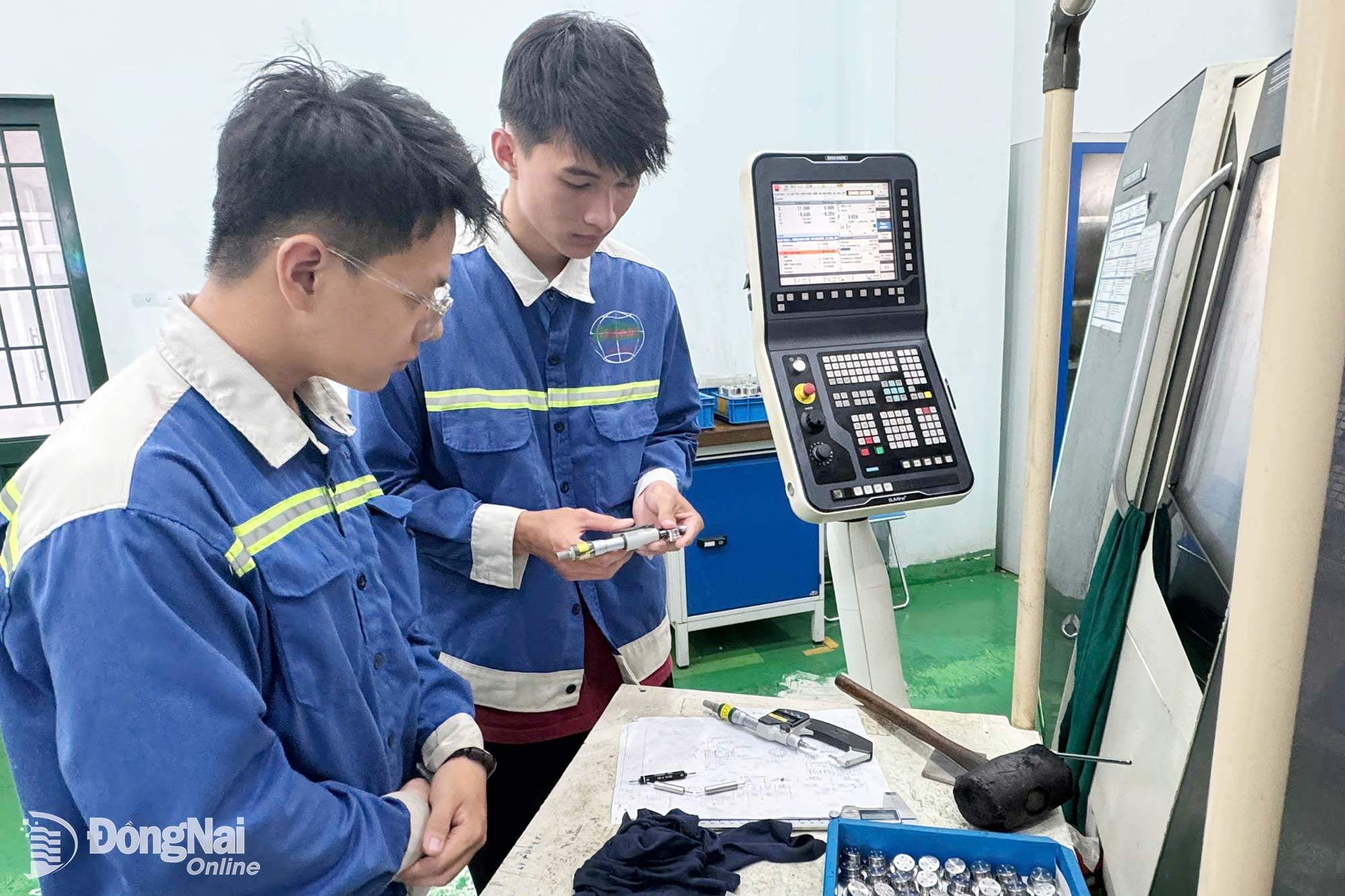 |
| Vocational training institutions adjust their curricula and increase the time allocated to practical training and internships for students. Illustrative photo: Bich Nhan |
Tran Duy Phong, Director of FPT Polytechnic – Dong Nai Campus, said: Each year, the college conducts labor market surveys, interviews partner enterprises, and monitors emerging industry trends. In recent years, our records have identified three fields experiencing particularly strong growth in recruitment demand: e-commerce, logistics, and information technology. “We pay close attention to the number of employees enterprises need to recruit, as well as their skill requirements and the specific positions they need to fill. This provides a sound basis for determining enrollment quotas and advising students to select majors suited to their abilities and interests," said Phong.
According to Phong, vocational education is not simply about obtaining qualifications; it must ensure that graduates can perform their jobs effectively. For example, e-commerce students must be able to manage online stores, process orders, and provide customer service. Logistics students must master procedures for warehouse operations, order fulfillment, and freight dispatch, while information technology students must be capable of developing, testing, and improving software products within their areas of specialization.
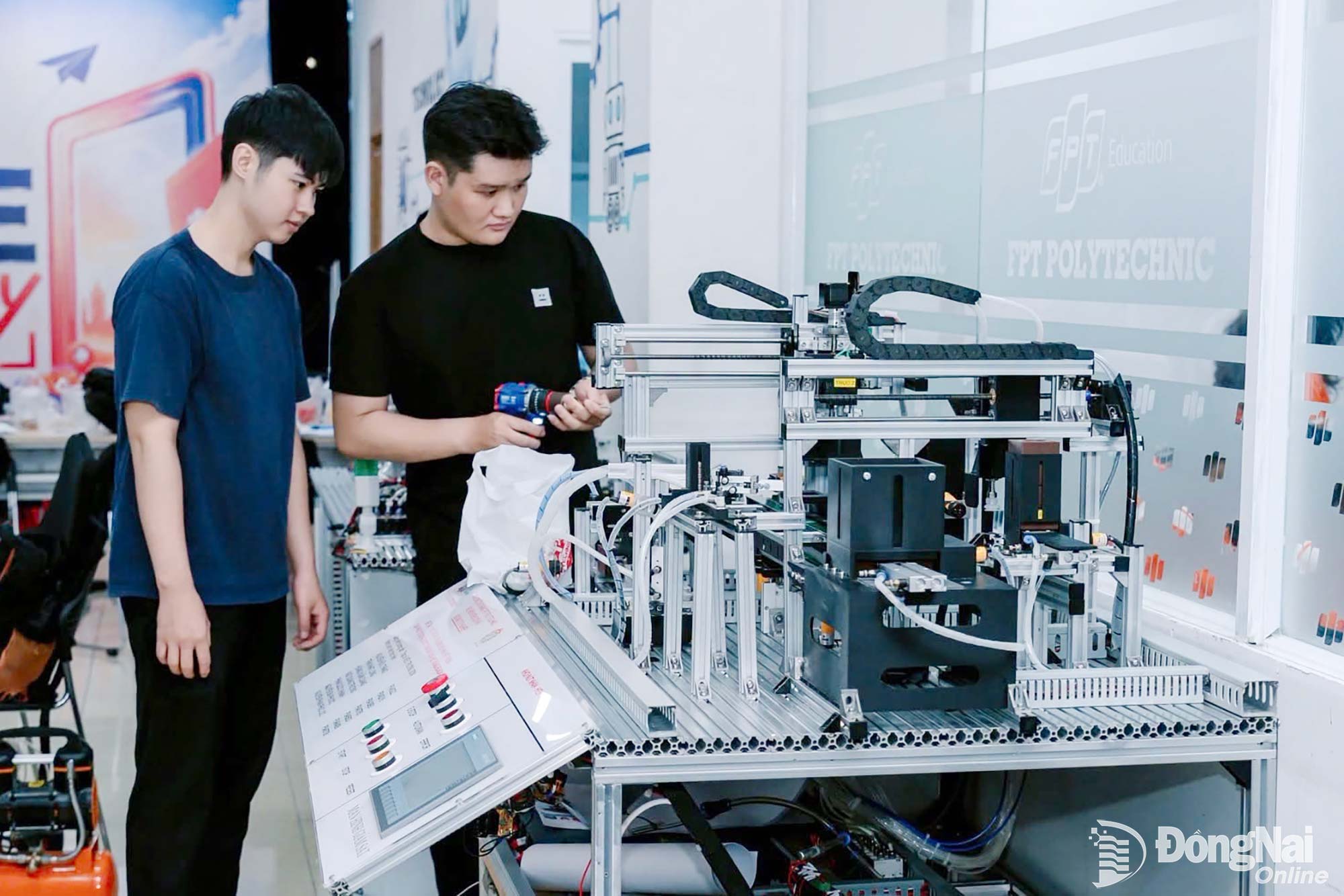 |
| Dong Nai will prioritize investment in key vocational education institutions and national and regional vocational skills training centers. |
According to the latest survey conducted by FPT Polytechnic – Dong Nai Campus, the employment rate among graduates reaches 78% six months after graduation and 97.7% after one year, with starting salaries ranging from 8 million to 10 million VND per month. "Collecting and regularly updating feedback from graduates and employers helps the college identify areas of training that need improvement. These include introducing more projects linked to practical challenges at enterprises, expanding internship opportunities, and strengthening cooperation with businesses in mentoring students and assessing their professional competencies," said Phong.
From a student's perspective, Vo Nguyen Ngoc Thy believes that formal qualifications remain essential, as a lack of appropriate credentials can limit employment opportunities and career advancement. However, qualifications alone are insufficient. Workers must also possess sound professional knowledge, practical skills, and a willingness to learn to meet workplace requirements effectively.
By Bich Nhan – Translated by Minh Hong, Minho




Thông tin bạn đọc
Đóng Lưu thông tin