
 |
In the first quarter of 2026, Dong Nai welcomed approximately 1.55 million visitors, generating nearly VND 1.16 trillion in tourism service revenue. In the second quarter, local tourist sites are pinning high expectations on the upcoming Hung Kings’ Commemoration Day, the Liberation of the South and National Reunification Day (April 30), and International Workers’ Day (May 1), which are forecast to draw large numbers of visitors from both within and outside the province. To prepare, tourism operators across the province have rolled out a range of programs and services to receive visitors.
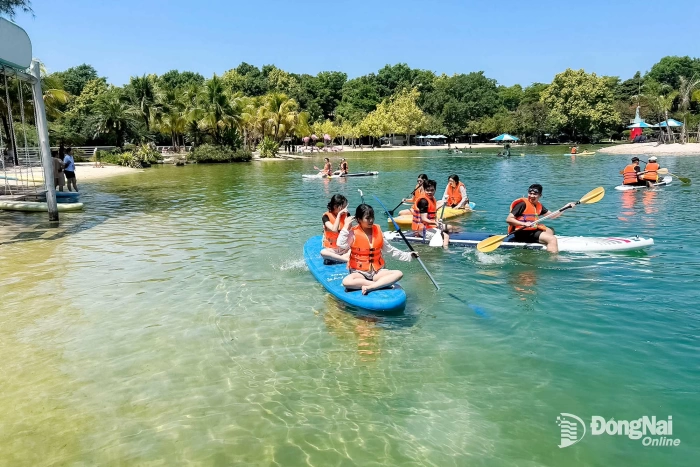
Dong Nai offers a wide array of attractions for travelers to choose from, including Cat Tien National Park, Bu Gia Map National Park, Tri An Lake, Cau Dau Lake, Suoi Mo, Buu Long Tourist Area, Bo Cap Vang Tourist Area, Giang Dien Waterfall, and Bom Bo Hamlet. In addition, visitors can opt for garden-based eco-tourism in localities such as Long Khanh, Bao Vinh, Xuan Loc, and Tan Phu, where they can enjoy fresh fruits and immerse themselves in a natural, tranquil environment.
As forecasts suggest that many families will prefer short-distance trips during the late April–early May holiday, this presents a valuable opportunity for Dong Nai’s tourism sector to attract more visitors. However, tourists to the province have traditionally tended to make day trips, resulting in relatively low spending, averaging around VND 750,000 per person. As a result, while visitor numbers remain high, tourism revenue has yet to match expectations. To boost earnings, it is essential to develop more appealing tourism products and accompanying services that encourage higher visitor spending.
In recent years, the province has made notable progress in shaping eco-tourism and resort products associated with forests, rivers, lakes, waterfalls, and orchards. Several enterprises have also invested in nature-based resorts under a green and sustainable model. Nevertheless, Dong Nai’s tourism sector remains largely underdeveloped, with products lacking distinctive highlights, services yet to be fully synchronized, and visitor stays still relatively short.
Against the backdrop of growing demand for experience-based and nature-oriented tourism, this is a clear competitive advantage for Dong Nai compared to many other localities in the region. Even so, such advantages can only be fully realized through well-planned development and focused investment. Tourist destinations need to be better connected to form value chains capable of retaining visitors. If each tourist were to spend around VND 1 million per visit, the province could generate an additional VND 1 trillion in annual revenue.
At present, tourism infrastructure has yet to keep pace with demand, while transport connectivity to certain destinations remains limited. Supporting services such as high-quality accommodation, distinctive cuisine, and souvenir products have not developed commensurately. For tourism to truly accelerate, a clear development strategy is needed, with a strong focus on identifying key products. For Dong Nai, these should center on eco-tourism, resorts, and experiential travel linked to forests, rivers, lakes, and waterfalls, combined with agricultural and local cultural tourism. Once this direction is clearly defined, investment attraction should also be selective, prioritizing capable investors with long-term vision and avoiding fragmented development that could harm the landscape.
In addition, the province should streamline administrative procedures, shorten processing times, prepare clean land banks, and improve transport connectivity to facilitate faster investment in tourism projects. At the same time, building a strong Dong Nai tourism brand is essential to creating a distinct presence on Vietnam’s tourism map. Greater efforts in training tourism human resources, alongside enhanced promotion and communication tied to cultural and sporting events, will further boost visibility and attract visitors.
By K. Minh – Translated by M.Nguyet, Minho



Thông tin bạn đọc
Đóng Lưu thông tin