
The secondhand clothing market is undergoing a marked transformation in both scale and customer engagement. In the past, secondhand clothes were typically associated with piles of used garments that shoppers had to sift through in cramped, cluttered stalls. Today, many secondhand stores have made more structured investments, with items now clearly categorized by style, size, material, and even brand.
 |
| Customers choose denim items produced in the 1990s to collect and rediscover the nostalgia of classic fashion brands at a secondhand shop on Phan Trung Street, Tam Hiep Ward. Photo: Le Duy |
This shift clearly reflects consumer trends: buying secondhand clothes is not just about saving money, but also about finding unique and unusual items.
Hunting for secondhand designer items
At secondhand clothing stores along Phan Trung and Nguyen Ai Quoc streets, customers can find not only reasonably priced items but also a wide variety of styles, materials, brands, and even vintage pieces marked by the passage of time. Driven by a desire to express individuality and hunt for unique, trendy items that suit modern lifestyles, secondhand clothing remains a popular choice, especially among young people.
Toward the end of the year, the trend of "hunting for secondhand designer items" becomes even more vibrant. Many shoppers spend time searching for pre-owned, yet high-quality, international branded goods at prices significantly lower than those of new items. The ability to own designer jackets, handbags, or jeans at an accessible cost makes secondhand fashion an appealing option, especially in a time when consumers are becoming increasingly mindful of their spending.
Tran Duc Hai (residing in Tran Bien ward), who has been collecting vintage clothing for many years, said: "I like secondhand clothes because each item has its own personality, especially rock band t-shirts or old denim jackets. These items are complicated to find in regular stores, and they look very unique when worn."
For young people, fashion is not simply about looking good, but also a form of self-expression. Secondhand clothing meets this need by reducing the likelihood of “clashing outfits,” a common issue with mass-produced fashion. A used shirt can become a standout piece when creatively styled, altered, or reimagined to match one’s personal aesthetic. This element of unpredictability and uniqueness turns secondhand shopping into a journey of discovery, one that requires both patience and a strong sense of style.
Beyond fashion, environmental consciousness is also a key factor driving consumers to choose secondhand clothing. According to a report by the United Nations Environment Programme (UNEP), the fashion industry is currently one of the world’s largest polluters, accounting for approximately 2–10% of total global greenhouse gas emissions and generating a significant amount of textile waste each year. Extending the lifespan of clothing through the resale of used garments is considered a practical solution to reducing waste and inefficiency of resources.
Nguyen Quoc Toan, owner of a secondhand clothing store on Phan Trung Street, Tam Hiep Ward, said: "Nowadays, customers not only ask about prices but also care about the origin, material, and how to style the clothes. Many people choose to buy secondhand clothes because they want sustainable consumption, to dress well while being more responsible towards the environment."
When fashion is linked to memories
One of the key factors that makes secondhand clothing so appealing is the variety rarely found in mainstream fashion stores. At the S.C. secondhand shop on Phan Trung Street, shoppers can come across vintage jackets, silk shirts, denim skirts, designer jeans, or T-shirts printed with images of rock bands from the 1980s and 1990s, all in one visit. Each item has its own unique silhouette, color, and story, offering a sense of exploration and discovery rather than a conventional shopping experience.
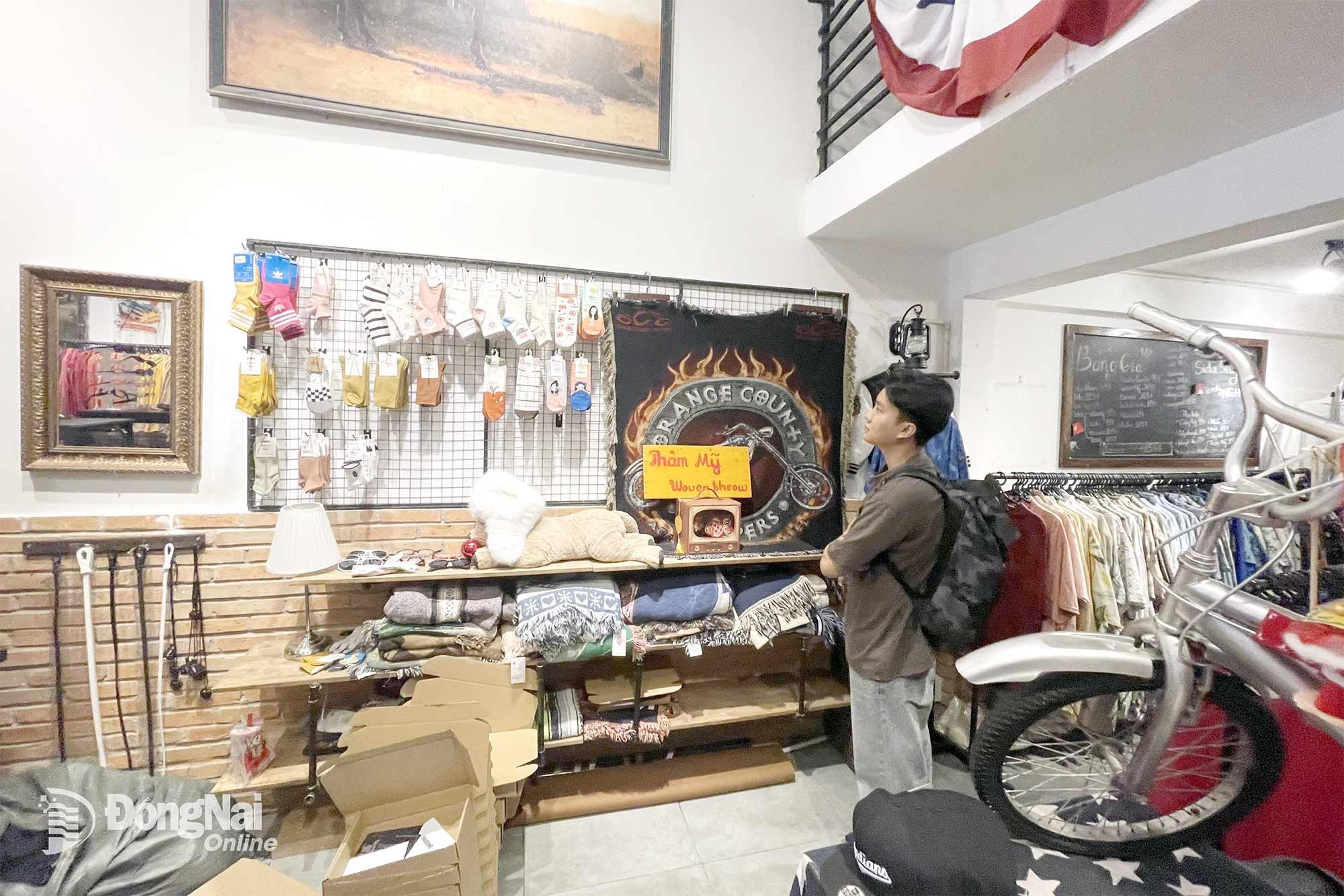 |
| It’s not just about clothing, as fashion accessories related to rock bands or classic culture are also popular collectibles among young people. |
Nguyen Minh Phuc (residing in Bien Hoa ward) said: He particularly loves t-shirts featuring rock bands from the 80s and 90s. Each shirt tells its own story. When wearing secondhand clothes, especially shirts printed with images of old bands, he feels like he's connecting with a musical era that he previously only knew through books, newspapers, or videos.
The fact that young people seek out and use items with a vintage feel reflects the intergenerational exchange, where fashion serves as a bridge, bringing memories back into modern life. Many young people believe that the timeless appeal and uniqueness of vintage clothing are what make it so attractive, allowing them to express their individuality and avoid repetition in their dressing style.
From a business perspective, Le Thi Minh Hue, owner of the L.H. secondhand clothing store on Nguyen Ai Quoc Street, said: "American denim jackets, coats, and t-shirts printed with rock band images are always sought after because they are associated with stories and memories of a bygone era. Telling the story behind each product makes secondhand clothing more valuable, not only in terms of usability but also culturally."
Secondhand clothing is increasingly chosen by young people not only because of its reasonable price but also because each item carries a story. From style and material to the marks of time, secondhand clothing helps wearers feel the difference compared to mass-produced clothes.
From the desire to dress well and express individuality to an appreciation for vintage values, secondhand clothing has gradually fostered a community that embraces classic styles and a slower-paced lifestyle. In the modern fashion landscape, secondhand clothing is no longer a fringe choice, as it has become a way for many, especially young people, to reconnect with memories and enrich their sense of identity.
By Le Duy – Translated by Quoc Dung, Minho


Thông tin bạn đọc
Đóng Lưu thông tin