
The green transition is not just a global imperative; it is increasingly becoming an unavoidable path for industrial localities like Dong Nai to reshape their growth models, improve development quality, and achieve balanced, sustainable integration of economic, social, and environmental goals.
 |
| Harvesting pomelos at Tan Trieu pomelo ecotourism village, Tan Trieu ward. Photo: Ngoc Lien |
Amid the growing complexity of climate change effects, rapid loss of natural resources, and increasing environmental pressures, growth models that depend mainly on resource exploitation, cheap labor, and high energy use have shown significant limitations. In response to this situation, “green transition” has become an unavoidable development trend for nations, regions, and communities alike.
The green transition is understood as the process of shifting from a “brown” growth model to a “green” one, where economic development aligns with environmental protection, efficient resource use, reduction of greenhouse gases, and improved quality of life. This is not a trade-off between growth and the environment; but rather a pursuit of new growth drivers based on innovation, clean technologies, and modern governance.
In Vietnam, the green transition is clearly outlined in numerous major guidelines and policies of the Party and the State, especially within strategies for sustainable development, green growth, and the long-term goal of achieving net-zero emissions. Within this broad framework, the role of localities - particularly key industrial provinces - is of critical importance.
Dong Nai: From "industrial locomotive" to the quest for sustainable development
 |
| The shrimp farming model in Phuoc An commune is increasingly being modernized, resulting in higher productivity |
Dong Nai is one of the most active localities in Vietnam, holding a strategic position in the key southern economic zone. With a system of large-scale industrial parks and clusters that strongly attract both domestic and foreign investors, Dong Nai plays a vital role in the country’s economic growth, job creation, and urban development.
However, the rapid industrialization process has also created numerous challenges for Dong Nai: environmental pollution in industrial zones and clusters; increasing demand for energy and resources; and the decline in the quality of living environments in some urban and rural areas near industrial zones.
This reality requires an urgent change: Dong Nai can no longer continue to grow extensively and must shift to a model focused on quality, efficiency, and sustainability. Therefore, green transition is not just a trend but also a key condition for Dong Nai to sustain its role as the "industrial engine" in the subsequent development stage.
From strategic awareness to determined action
 |
| The clean durian farming model in Xuan Lap ward, Dong Nai province. Photo: D. Phu |
A notable point in the green transition process in Dong Nai is the significant shift in awareness across the entire political system, local governments, and the business community.
While environmental protection was previously often viewed as an obligation "accompanying" development, today, many of the province's policies and directions regard ecological sustainability as a core criterion for growth. This is reflected in efforts such as: integrating sustainable development and green growth goals into the province's socio-economic development planning; selectively attracting investment with a focus on high-tech, environmentally friendly projects; and gradually fostering a long-term development mindset, with the quality of the environment and people’s quality of life as key measures.
Correct awareness is the foundation, but it is only when this understanding is translated into concrete actions that the green transition can genuinely become a part of daily life. Dong Nai is gradually turning political will into specific programs and solutions.
Green industry and agriculture: Pillars of green transition in Dong Nai
As a locality with a significant proportion of industry, Dong Nai demonstrates its green transition clearly in the industrial sector, which plays a crucial role in the province's economy. In line with its sustainable development goals, Dong Nai is gradually developing and restructuring its industrial parks in line with the eco-industrial park model. Following this model, businesses no longer operate in isolation but are integrated into production chains that emphasize efficient resource use, waste recycling, and energy conservation. Many industrial zones have invested in centralized wastewater treatment systems and improved environmental monitoring, and are progressively adopting cleaner production standards, thus laying the foundation for a circular economy in industry. These efforts help reduce emissions and enhance resource efficiency.
Alongside the state's guiding role, businesses are recognized as key players in the green transition. Facing increasingly strict environmental standards from international markets, many enterprises in the province have proactively adopted technological innovation, improved production processes, and focused on energy conservation and carbon emission reduction. In practice, the green transition is not only a social responsibility but also a competitive edge, helping businesses in Dong Nai improve their integration into the global value chain and engage more deeply in it.
Besides industry, Dong Nai is also focusing on promoting green agriculture and sustainable farming as key parts of the green transition. The province speeds up the restructuring of crops and livestock to add value and lessen environmental harm; it encourages the use of science and technology, smart agriculture, and organic farming. These approaches not only help protect land and water resources but also boost farmers' income and stabilize their livelihoods.
The harmonious integration of green industry and green agriculture helps Dong Nai avoid uneven development and establishes a strong base for long-term sustainable growth.
Green urbanization and sustainable infrastructure – Space for future development
The green transition is inseparable from urbanization, especially in a rapidly developing locality like Dong Nai. In line with sustainable development, the province is gradually building a green, innovative, and livable urban model that puts people at the center and prioritizes the environment throughout. Urban planning focuses on efficient land use, expanding green spaces, and increasing the area of greenery and water bodies, thereby improving microclimates and enhancing the quality of living environments. In parallel, Dong Nai is prioritizing the development of a synchronized, modern transportation infrastructure system that gradually reduces traffic congestion, saves energy, and limits emissions during the urbanization process. This approach aims to create a sustainable urban environment that balances development with environmental protection, paving the way for future growth.
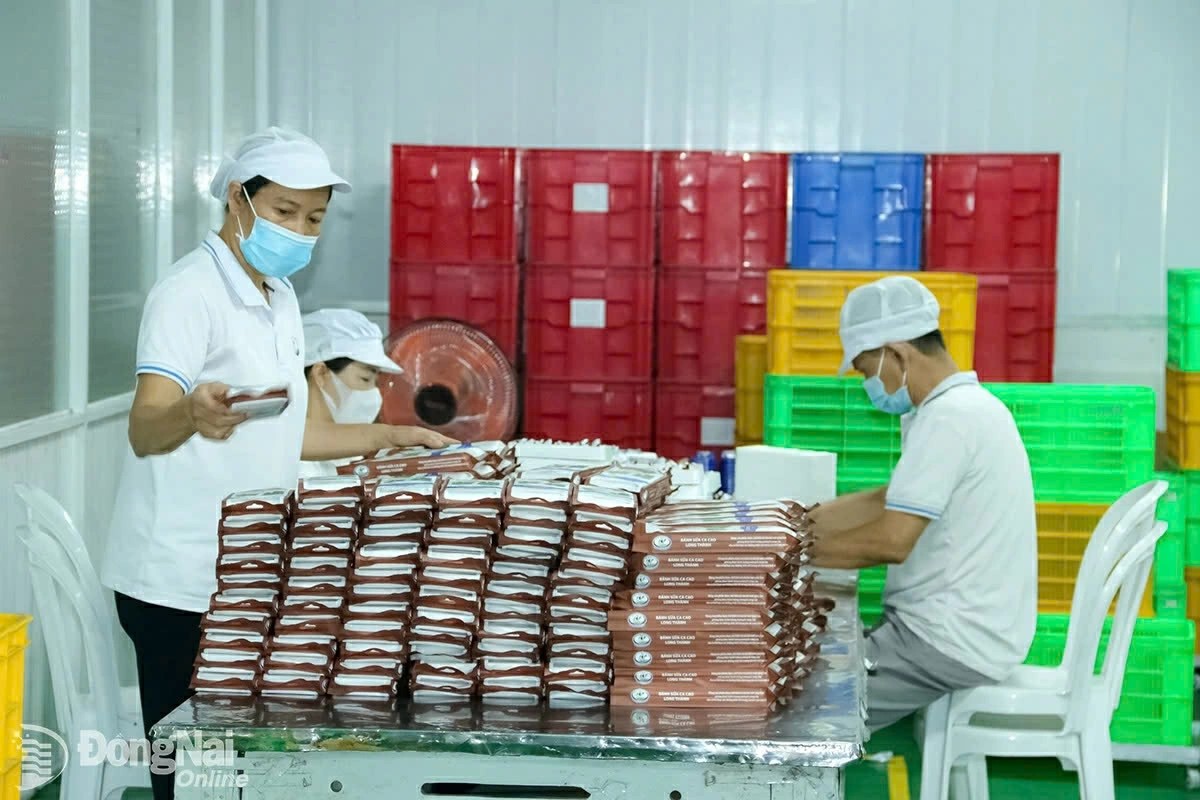 |
| Candy production at Domilk Joint Stock Company (Long Thanh commune, Dong Nai province). Photo: Vuong The |
Another critical pillar is accelerating the application of digital transformation in urban management, environmental monitoring, and public service delivery, aiming towards transparent, efficient, and business and citizen-friendly urban governance. The harmonious integration of green urbanization and sustainable infrastructure not only improves residents' quality of life but also creates an attractive investment environment, strengthening the foundation for Dong Nai's future stable and sustainable development.
Despite the positive results achieved, Dong Nai still faces numerous challenges in its green transition, both in terms of resources and implementation capacity. Firstly, financial resources for investing in green technologies, environmental infrastructure, and innovation are limited, while the demand for investment in transitioning growth models is immense. Additionally, businesses' technological capabilities and green governance skills are not uniform, particularly among small and medium-sized enterprises, which makes the transition process less synchronized. Another challenge is that the development of indicators, measurement tools, and mechanisms for monitoring the effectiveness of green transition is still underway and has not yet fully met practical management requirements.
In addressing these challenges, Dong Nai must continue to enhance its institutional framework and policies consistently and practically, focusing on mechanisms that promote green investment and help businesses access capital, technology, and markets. Additionally, the province should strengthen the training and development of high-quality human resources capable of meeting the needs for governance, operation, and innovation in the green transition, thereby establishing a solid foundation for long-term sustainable development.
The green transition in Dong Nai is not a story of the distant future, it is unfolding every day in the province’s development. From strategic awareness to concrete action, from industry to agriculture, from urban areas to rural regions, Dong Nai is gradually shaping a development model that balances economic growth with environmental protection.
The road ahead remains full of challenges, but with political resolve, the support of businesses, the active participation of local citizen, the green transition will become a new driving force that helps Dong Nai maintain its role as a leading province, while promoting sustainable, inclusive, and responsible growth for future generations.
By Tu Huu Cong – Translated by Hong Van, Thu Ha


Thông tin bạn đọc
Đóng Lưu thông tin