
Assoc. Prof. Dr. Nguyen Huy Thang, Vice President of the Vietnam Stroke Association, assessed that Dong Nai is among the leading localities nationwide in stroke treatment capacity. The province now has multiple medical facilities that have earned Gold, Platinum, and Diamond certifications from the World Stroke Organization (WSO).
These achievements not only affirm the professional capacity and advancements of Dong Nai’s healthcare sector, but more importantly, they open up greater opportunities to save patients in the “race against time” when treating strokes.
Diamond-Level stroke treatment: raising the standard of patient survival
Recently, Thong Nhat General Hospital in Dong Nai received the Diamond Certification in stroke treatment from the World Stroke Organization. This accomplishment is the highest level awarded to stroke treatment units and centres.
According to Specialist Doctor Level II Nguyen Tuong Quang, Director of Thong Nhat General Hospital, from January 2018 to November 2025, the hospital treated more than 7,500 stroke patients. Over the years, coordinated teams from the Emergency, Neurology, Radiology, and Physical Therapy – Rehabilitation departments have worked in close collaboration to receive, diagnose, treat, and support patients in regaining motor function after intervention.
To attain Diamond Certification, medical facilities must fully meet approximately 10 stringent criteria, including strict time limits from hospital admission to vessel recanalization, timely imaging diagnostics (CT/MRI) for the majority of stroke patients, rapid intervention, and a comprehensive protocol that spans emergency response, treatment, and post-stroke rehabilitation.
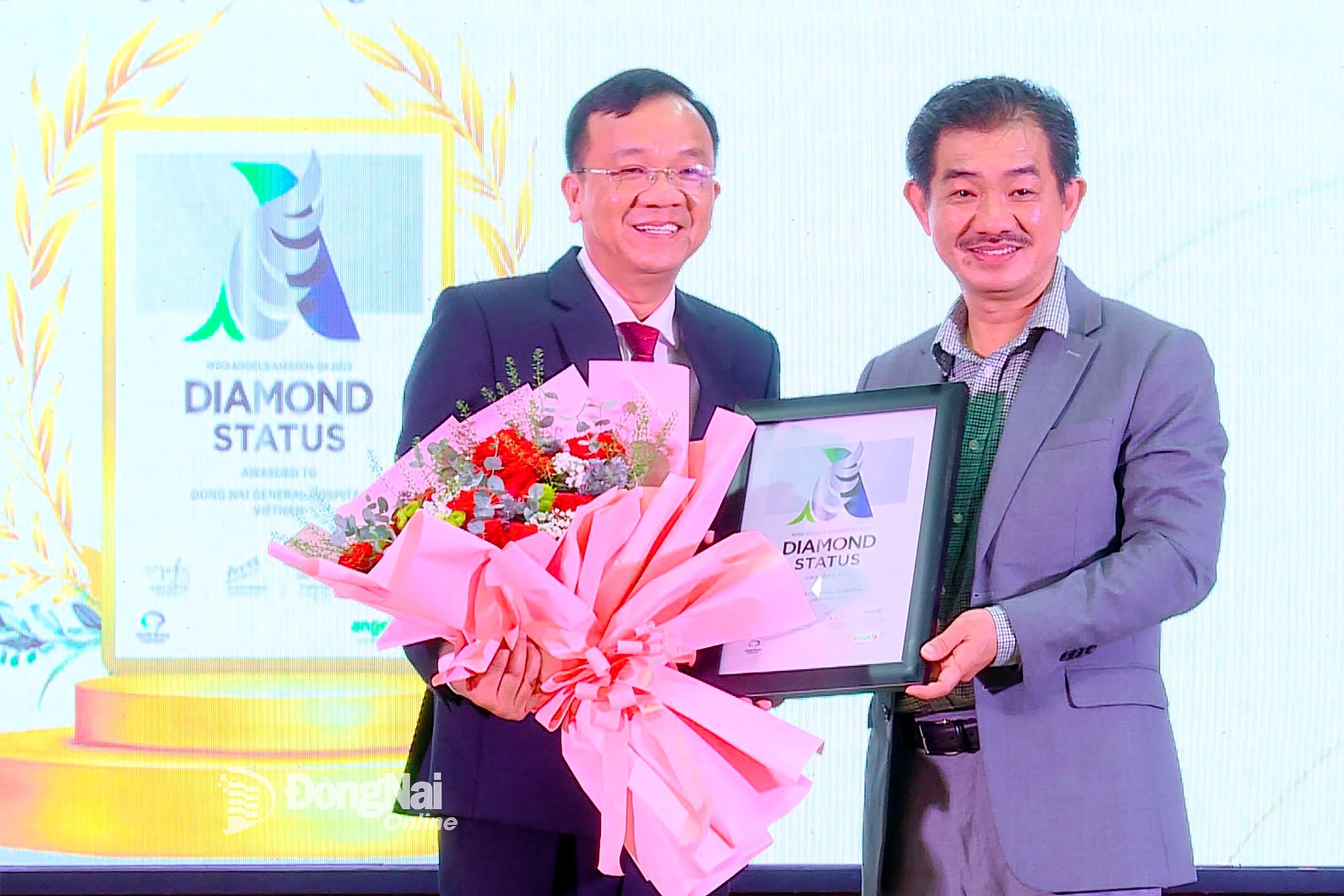 |
| Dong Nai General Hospital is the first hospital in the province to obtain the Diamond Certification in stroke treatment. Photo: Ngoc Thanh |
Before Thong Nhat Hospital, Dong Nai General Hospital was the first facility in the province to receive Diamond Certification for stroke treatment. According to Specialist Doctor Level II Nguyen Dinh Quang, Head of the Neurology Department at Dong Nai General Hospital, this certification is not merely a title, but a recognition that the hospital has reached a level comparable to the world’s leading stroke centers in terms of system quality and professional capacity.
Being reviewed quarterly, therefore, maintaining “Gold, Platinum, or Diamond” certification is not permanent but requires consistent high performance. Sustaining this standard requires the coordinated effort of the entire multidisciplinary team and must be proven through real clinical outcomes and patient recovery.
“For years, our team has worked tirelessly to ensure early, timely diagnosis, intervention, and emergency treatment for stroke patients,” Dr Quang shared.
 |
| Dr. Nguyen Dinh Quang, Head of the Neurology Department at Dong Nai General Hospital, examines a patient's limb function after a stroke. Photo: Bich Nhan |
As of now, Dong Nai has two advanced-level hospitals: Dong Nai General Hospital and Thong Nhat General Hospital, both of which have achieved Diamond Certification in stroke treatment. The same organization has awarded Long Khanh Regional General Hospital Platinum Certification.
According to Specialist Doctor Level II Le Quang Trung, Deputy Director of the Dong Nai Department of Health, in addition to facilities that meet high standards in stroke care, the province also has Dinh Quan Regional General Hospital, which is currently implementing thrombolytic therapy in stroke treatment. In the near future, this therapy will be introduced at Binh Phuoc General Hospital and Long Thanh Regional General Hospital to provide timely care for residents. Stroke patients must receive emergency treatment within the “golden hour” for recovery to be effective and for them to return to their daily lives and work as before.
Improving both quantity and quality of stroke treatment units
Assoc. Prof. Dr Nguyen Huy Thang stated that Vietnam records around 200,000 new stroke cases each year. Stroke is one of the leading causes of death and disability, making patients a burden for their families and society. Therefore, in recent years, the Vietnam Stroke Association has developed a nationwide stroke network to ensure early access to medical services, improving recovery rates while reducing disability and mortality.
According to Assoc. Prof. Dr Nguyen Huy Thang, Vice President of the Vietnam Stroke Association, stated that early recognition of stroke symptoms within the community is crucial. These symptoms are often easy to identify, such as sudden facial drooping, weakness in one arm or leg, and slurred or distorted speech.
Unlike many other illnesses, stroke patients must be taken to the correct facility, and that is, a medical center equipped to treat strokes, to minimize treatment delays and reduce the risk of death or permanent disability. Practices such as squeezing lemon juice into the patient's mouth or pricking their fingers to draw blood must be strictly avoided, as these misguided actions can cost the patient their chance of survival and recovery.
Thirty years ago, stroke patients arriving at hospitals had little hope, as medical facilities lacked equipment and treatment protocols. Today, the situation has undergone a dramatic change. Vietnam now has around 170 stroke units and centres nationwide, helping thousands of patients from the risk of lifelong disability to return to everyday life, thanks to timely intervention.
“Beyond expanding the treatment network, our priority is improving quality at each unit and centre,” Assoc. Prof. Dr Nguyen Huy Thang emphasized.
 |
| Deputy Director of the Dong Nai Department of Health, Le Quang Trung (left), presents flowers to the hospital in recognition of its Diamond Certification. Photo: Bich Nhan |
The fact that both of Dong Nai’s major hospitals hold the highest stroke treatment certification demonstrates the professional capability of their healthcare teams and the strength of Dong Nai’s medical sector. The provincial health sector will continue to expand and enhance stroke treatment services.
In the coming period, Thong Nhat General Hospital will continue training additional medical staff and doctors to perform this procedure. In addition to its existing Digital Subtraction Angiography (DSA) machine, as well as 128-slice and 256-slice CT scanners, the hospital has submitted a proposal to the Department of Health and the Provincial People's Committee to invest in an additional DSA machine for the treatment of stroke and various other vascular conditions. This investment will not only ease the growing overload caused by the rising number of interventions, but also significantly shorten the time needed for diagnosis and vascular recanalization in stroke patients.
With more equipment, the hospital can conduct multiple emergency procedures concurrently, minimize delays during the “golden hour,” and enhance diagnostic accuracy in cerebrovascular and cardiovascular diseases, ultimately broadening the range of timely and safe treatment options for more patients.
Currently, the World Stroke Organization applies three certification levels: Gold, Platinum, and Diamond, based on a rigorous set of criteria that includes treatment timelines, professional competence, medical equipment, and clinical outcomes. Meeting these standards is not only a measure of quality but also a demonstration of a healthcare facility’s commitment to providing patients with the best chance of survival, minimizing long-term complications, and accessing internationally aligned treatment methods. This approach also supports the standardization of Vietnam’s stroke care system, bringing patients closer to advanced, world-class therapies in the “race against time” to save lives.
By Bich Nhan – Translated by Thuy Trang, Minho


Thông tin bạn đọc
Đóng Lưu thông tin