
On December 26, in Dong Nai Province, the Department of Finance and Sectoral Economics under the Ministry of Finance, in coordination with the United Nations Office for Project Services (UNOPS), held a seminar on Clean Energy Development Strategies and Investment Frameworks for Provincial-Level Industrial Parks.
 |
| Senior specialist Nguyen Manh Son of the Department of Finance and Sectoral Economics speaks at the workshop. Photo: Hoang Loc |
Speaking at the workshop, senior specialist Nguyen Manh Son of the Department of Finance and Sectoral Economics, noted that as Viet Nam strongly implements its commitments to green growth and energy transition, particularly the goal of achieving net-zero emissions by 2050, the development of clean energy linked to industrial park systems has been identified as one of the key pillars. Industrial parks not only serve s engines of economic growth but also play a critical role in promoting energy efficiency, reducing emissions, and attracting high-quality investment capital.
 |
 |
| Delegates attend the seminar. Photo: Hoang Loc |
However, practical implementation shows that the development of clean energy in industrial parks still faces numerous challenges, including ensuring alignment between energy planning and industrial park development planning, to completing the policy frameworks, and mechanisms for mobilizing and allocating financial resources. The seminar served as a forum for state management agencies, international organizations, experts, research institutes, and relevant stakeholders to exchange views, share experiences, identify opportunities and challenges, and propose orientations and solutions to improve policy frameworks and investment models for clean energy development in provincial-level industrial parks.
 |
| Vice President Nguyen Anh Tuan of the Vietnam Energy Association, discuss some general assessments of the renewable energy sector. Photo: Hoang Loc |
 |
|
Deputy Head of the Management Board of Dong Nai Industrial and Economic Zones Authority (DIEZA), Nguyen Trong Tien, shares local experiences, challenges, and future directions for building and operating eco-industrial parks. Photo: Hoang Loc |
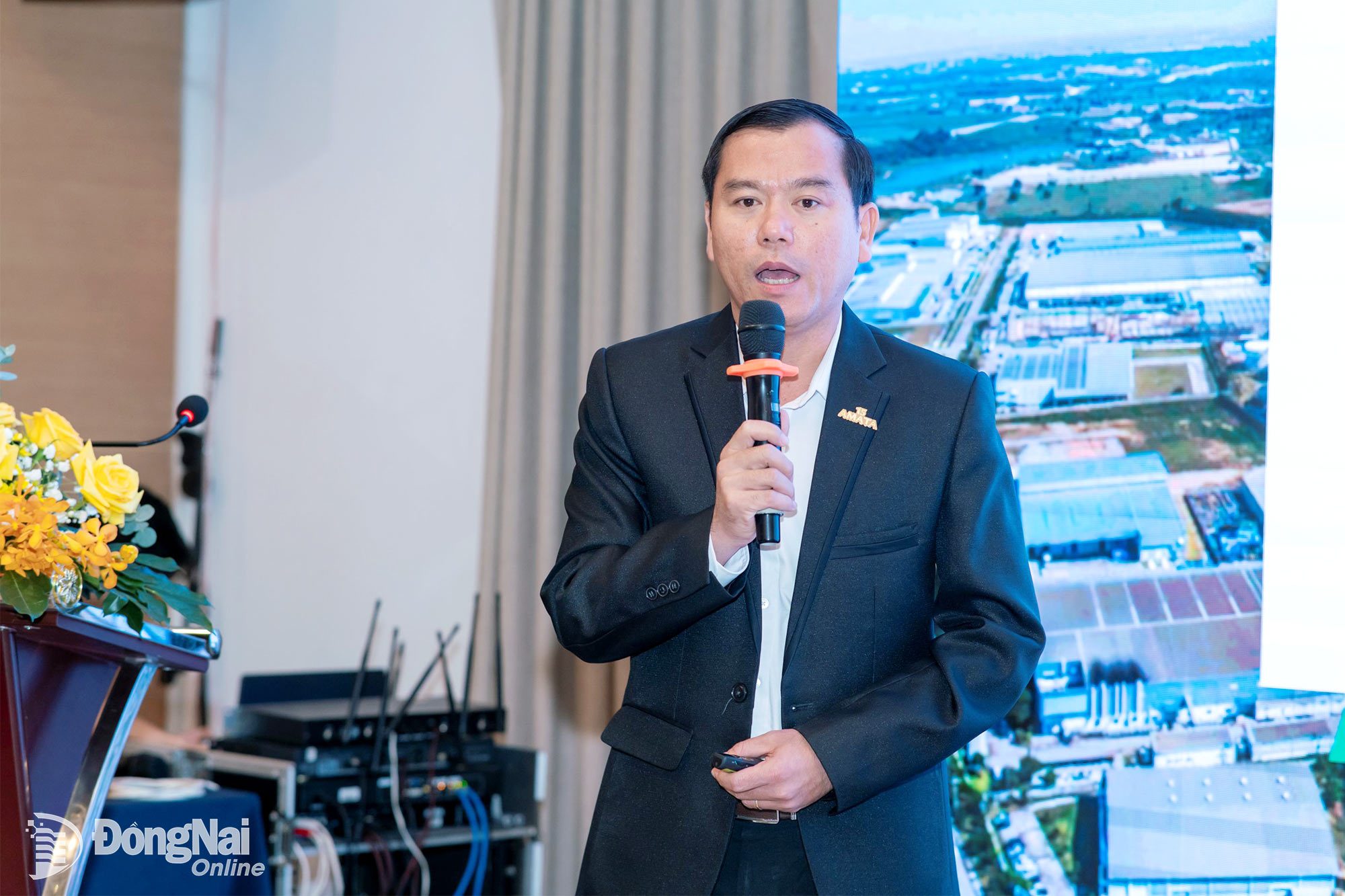 |
| Deputy Director Nguyen Huu Nghi of Amata City Bienhoa Joint Stock Company shares insights on the eco-industrial park model at the seminar: Photo: Hoang Loc |
Senior specialist Nguyen Manh Son highly appreciated the close cooperation and strong support of the Southeast Asia Energy Transition Partnership (ETP) implemented by UNOPS, as well as the active participation of experts, policymakers, and representatives from local authorities. He noted that the opinions and recommendations exchanged at the seminar would serve as an important basis for the Ministry of Finance and relevant agencies to continue studying and refining financial policies, thereby creating a transparent, stable, and attractive investment environment for the development of clean energy in the coming period.
 |
| The working delegation from the Department of Finance and Sectoral Economics (Ministry of Finance) and UNOPS conducted a field visit to the industrial park in Dong Nai province on December 25. Photo: Hoang Loc |
At the workshop, representatives of the Viet Nam Energy Association discussed some overview assessments of the renewable energy sector. The Dong Nai Industrial and Economic Zones Authority (DIEZA) shared local experiences in developing and operating eco-industrial parks, along with existing challenges and future directions. Meanwhile, Amata City Bienhoa Joint Stock Company introduced its eco-industrial park model integrating technology, energy solutions, and environmental management.
In addition, several industrial park infrastructure investors in the province discussed legal and infrastructure-related advantages and difficulties in developing renewable energy for industrial production.
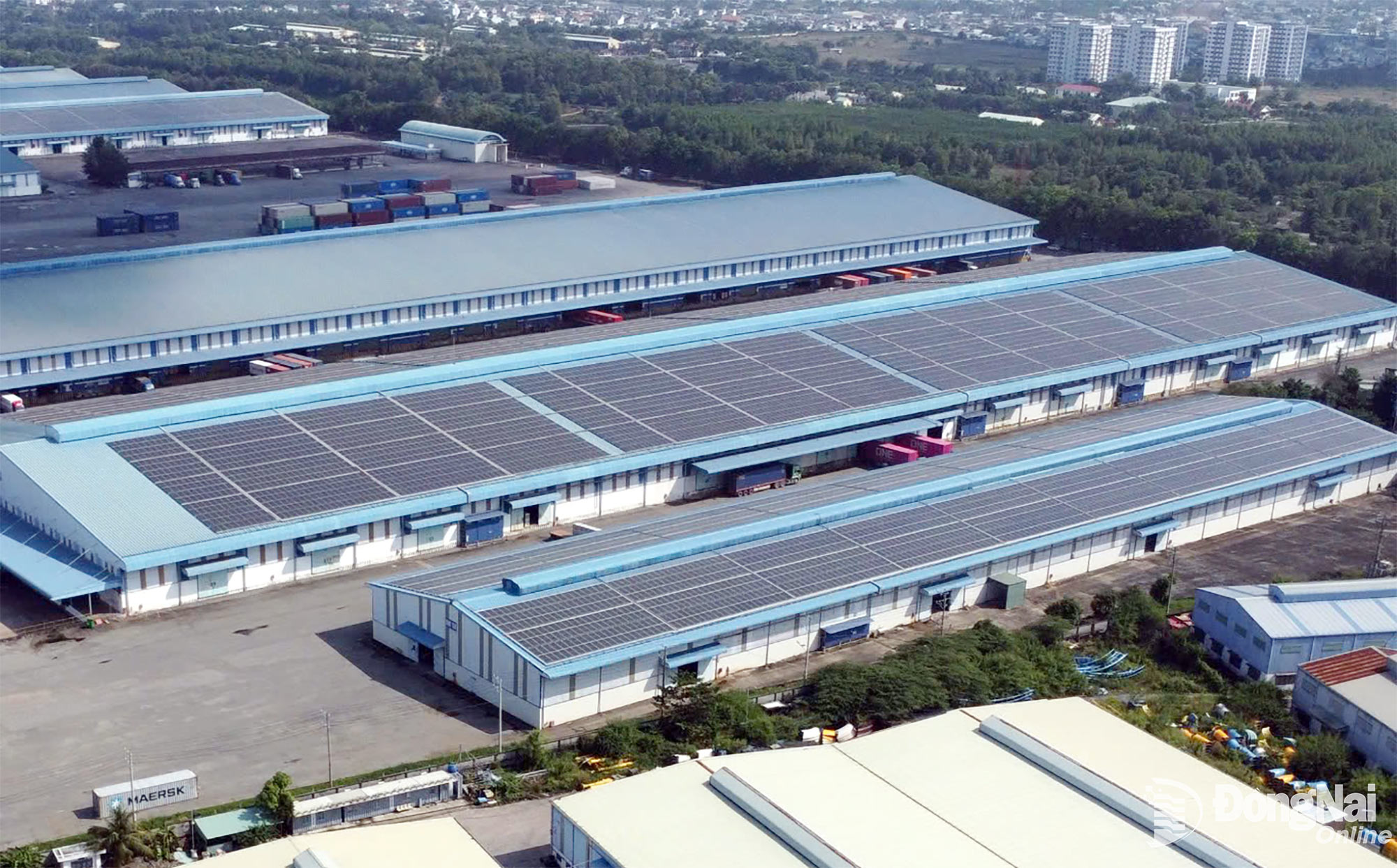 |
| Rooftop solar power system in Long Binh Industrial Park, Dong Nai province. Photo: Hoang Loc |
Dong Nai is among the country’s leading localities in industrial development and foreign direct investment attraction. Therefore, the province has great potential and demand for renewable energy, particularly rooftop solar power in industrial parks. Currently, Dong Nai is home to 58 industrial parks, one economic zone, and one high-tech park. According to the approved plan, the province will have 81 industrial parks, one high-tech park, and one economic zone by 2030.
 |
| Delegates attending the workshop pose for a commemorative photo. Photo: Hoang Loc |
Alongside these advantages, Dong Nai remains an attractive destination for both domestic and foreign investment. So far, the province has attracted investment from 45 countries and territories, with more than 2,700 projects. Most international investors demand clean energy and emission reductions to comply with environmental standards. Many industrial parks in Dong Nai are being oriented toward transformation into eco-industrial and green models. In this context, clean energy development is both an urgent requirement and a competitive advantage for the province to meet the target of sustainable growth and deeper integration into global value chains.
By Hoang Loc – Translated by Thuy Trang, Thu Ha


Thông tin bạn đọc
Đóng Lưu thông tin