
On the morning of November 29, following an assessment, the Ministry of Health’s Appraisal Council concluded that Dong Nai General Hospital meets all conditions to perform kidney removal and transplantation procedures from both living donors and brain-dead donors.
This procedure needs to be implemented promptly to meet the very high demand for kidney transplants at hospitals, particularly among young patients of working age.
High demand for kidney transplants
According to Specialist Level I Doctor Nguyen Tat Trung and Head of the General Planning Department at Dong Nai General Hospital, the hospital’s Hemodialysis - Artificial Kidney Department currently operates 46 regular dialysis machines and 2 HDF-online machines, an advanced blood filtration system that removes toxins from the blood more effectively. The department provides outpatient dialysis for about 220 patients and treats 15-20 inpatients daily.
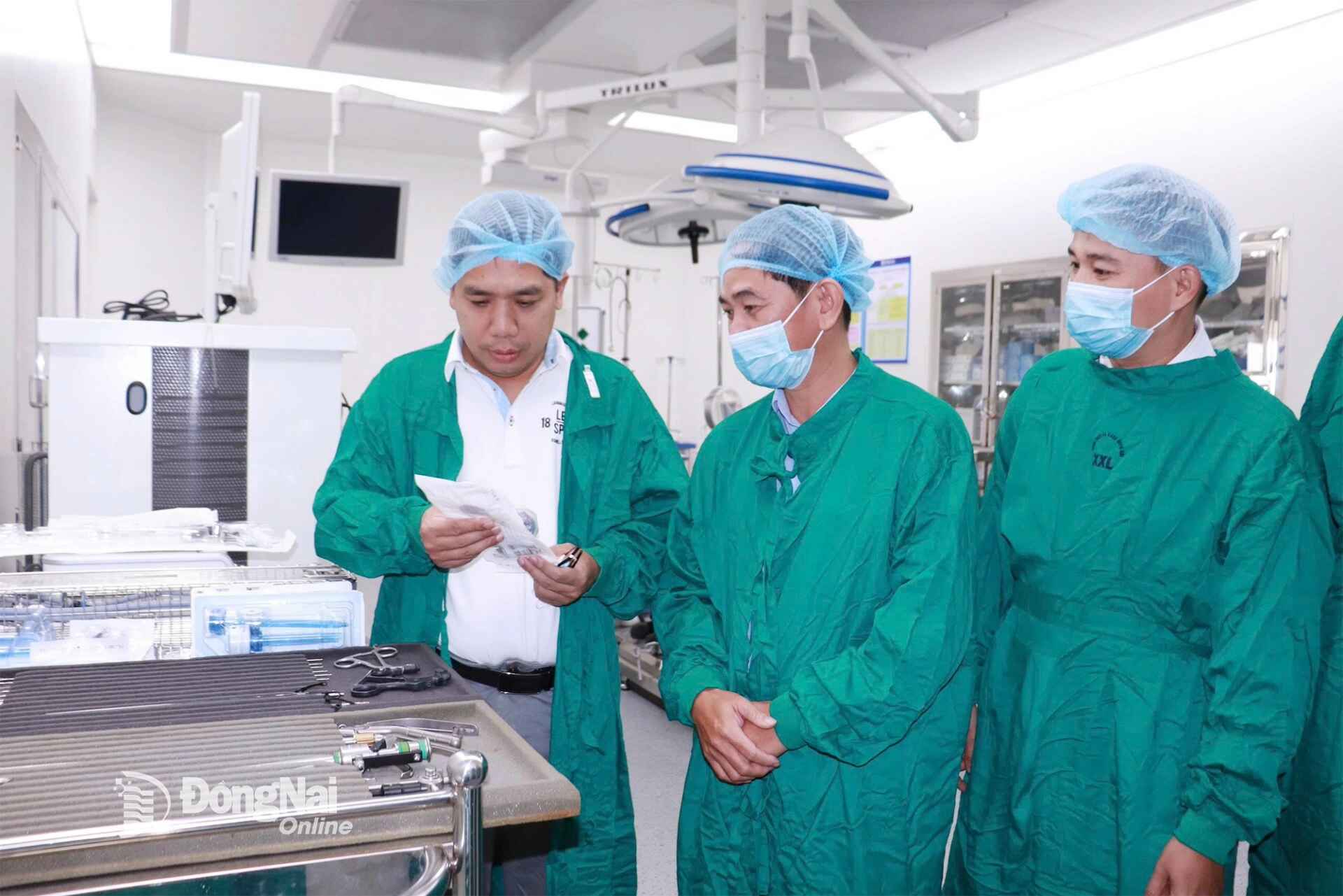 |
| The Ministry of Health’s Appraisal Council inspects the facilities for kidney transplantation at Dong Nai General Hospital. Photo: Bich Nhan |
Notably, many patients who require dialysis three times a week are still young and of working age. “At that point, patients are tied to hospital beds, machines, and intravenous lines… forcing them to face career interruptions, reduced income, and lost opportunities for personal growth. They have to give up their ‘youthful dreams’ due to a chronic disease that seems to affect only the elderly,” Dr. Trung said.
Furthermore, overcrowding remains a persistent issue at both public and private hospitals, as well as regional medical centers offering hemodialysis. Hospitals have expanded hemodialysis areas, invested in additional machines, and even increased staff and dialysis shifts (from 2-3 shifts per day to 4), yet many patients still face long waiting lists for dialysis machines.
According to the analysis of Specialist Level II Doctor Ngo Duc Tuan and Director of Dong Nai General Hospital, the number of patients requiring hemodialysis is steadily increasing. Consequently, the demand for kidney transplants is also rising, particularly among younger patients. In response to this situation, the hospital is determined to implement kidney transplantation procedures to help patients avoid the burden of undergoing hemodialysis three times a week. Three years ago, the hospital sent a team of specialists for professional training at Cho Ray Hospital (Ho Chi Minh City), including 10 surgeons, 4 anesthesiologists, 3 transplant rejection specialists, 9 nurses, and 4 anesthesia technicians.
 |
| The Ministry of Health’s Appraisal Council discusses with doctors from Dong Nai General Hospital. Photo: Bich Nhan |
Ngo Duc Tuan, Director of Dong Nai General Hospital, emphasized: “As a specialized, end-of-line hospital in the province, we are committed to implementing kidney transplantation to meet the genuine needs of local patients. This initiative will allow patients to avoid referrals to other hospitals, reduce the burden on hospitals in Ho Chi Minh City, and simultaneously affirm our professional capacity, enhancing both the hospital’s and the province’s healthcare system.”
Hospital meets requirements for kidney removal and transplantation
Regarding this procedure, Dong Nai General Hospital has developed a Kidney Transplantation Plan and established all required councils and specialized subcommittees as mandated by the Ministry of Health. These include the Kidney Transplant Advisory Council, the Kidney Transplant Expert Council, the Brain-Death Diagnosis Expert Council; subcommittees for the treatment of brain-dead patients and for encouraging organ donation from brain-dead patients. In addition, there are dedicated teams for living and deceased donor kidney retrieval, kidney perfusion and preservation, transplant surgery, and post-transplant care.
 |
| The Ministry of Health’s Appraisal Council concludes that Dong Nai General Hospital meets all requirements to perform kidney removal and transplantation procedures. Photo: Bich Nhan |
Performing this advanced and specialized procedure requires close coordination among multiple medical specialties. After thorough preparation of both personnel and facilities, on November 29, during the Ministry of Health’s Appraisal Council’s review of the conditions for performing kidney removal and transplantation from living and brain-dead donors at Dong Nai General Hospital, M.D Ha Anh Duc, Director of the Department of Medical Examination and Treatment (Ministry of Health) and Chairman of the Council, stated: “Currently, there are 30 kidney transplant centers nationwide. Dong Nai is a densely populated province with a large number of patients requiring regular hemodialysis. Yet, the fact that Dong Nai General Hospital is only now starting to perform kidney transplants is still considered slow compared to the actual demand.”
On November 29, the Ministry of Health’s Professional Council convened to assess the conditions for performing kidney retrieval and transplantation from living donors and brain-dead donors at Dong Nai General Hospital.
Currently, Dong Nai has about 1,500 patients with end-stage chronic kidney failure. The Professional Council assessed that, given the rising number of patients with chronic kidney disease who require regular hemodialysis, Dong Nai General Hospital has now met all necessary conditions and is ready to carry out kidney transplantation, bringing new hope to hundreds of patients in the province.
After the working session, the Professional Council recommended that the hospital and the Department of Health advise and propose to the provincial People’s Committee to provide additional support and investment in infrastructure, personnel, resources, and equipment in order to establish a Transplant Center for Dong Nai in the near future.
However, the hospital has made thorough preparations in both infrastructure and human resources. "After our inspection, the hospital has met all the necessary conditions to perform this technique. The operating room system and the pool of medical staff have been well prepared. Therefore, the hospital should implement it as soon as possible," M.D Ha Anh Duc emphasized.
Therefore, following this assessment, the hospital needs to develop a recipient list with clear criteria to proceed with kidney transplants. Among them, young people of working age, as well as women and children, will be placed in the priority group for transplantation.
"On average, each patient undergoing hemodialysis incurs about 200 million VND per year in treatment costs, while the cost of taking anti-rejection medication after a kidney transplant is around 60 million VND per year. Moreover, patients who receive a transplant can regain their working capacity, reducing the burden on their families and society. Therefore, kidney transplantation is not only a high-level medical technique for healthcare facilities but also brings significant economic value to the community," M.D Ha Anh Duc explained.
The Ministry of Health’s Appraisal Council stated that, initially, Dong Nai General Hospital will perform kidney retrieval from brain-dead donors for patients in need. Once kidney transplantation is carried out proficiently, the hospital should move on to multi-organ transplantation.
By Bich Nhan - Translated by Huyen Trang, Thu Ha


Thông tin bạn đọc
Đóng Lưu thông tin