
On December 2nd, Nguyen Thi Hoang, Member of the Provincial Party Committee and Vice Chairwoman of the Dong Nai People’s Committee, chaired a working session with relevant departments, agencies, and water supply enterprises to review the status of rural clean water provision in Dong Nai Province for the 2021-2025 period and discuss orientations for the 2026-2030 period.
 |
| Nguyen Thi Hoang, Member of the Provincial Party Committee and Vice Chairwoman of the Dong Nai People’s Committee, presides over the working session. Photo: B. Nguyen |
As of December 2025, 100% of rural households in Dong Nai province have access to hygienic water; 79% have access to clean water meeting national standards. Of this number, 43% use water supplied by centralized water systems, while 36% rely on household-level water facilities or filtration devices.
During the 2021-2025 period, the former Dong Nai province implemented 26 rural clean water provision projects. Of these, 15 have been completed and put into use, while 11 are still in the project preparation phase. The total length of water pipelines constructed to expand the service coverage of centralized water systems reached 1,048 kilometers. Total investment capital for these water provision projects exceeded 2.3 trillion VND.
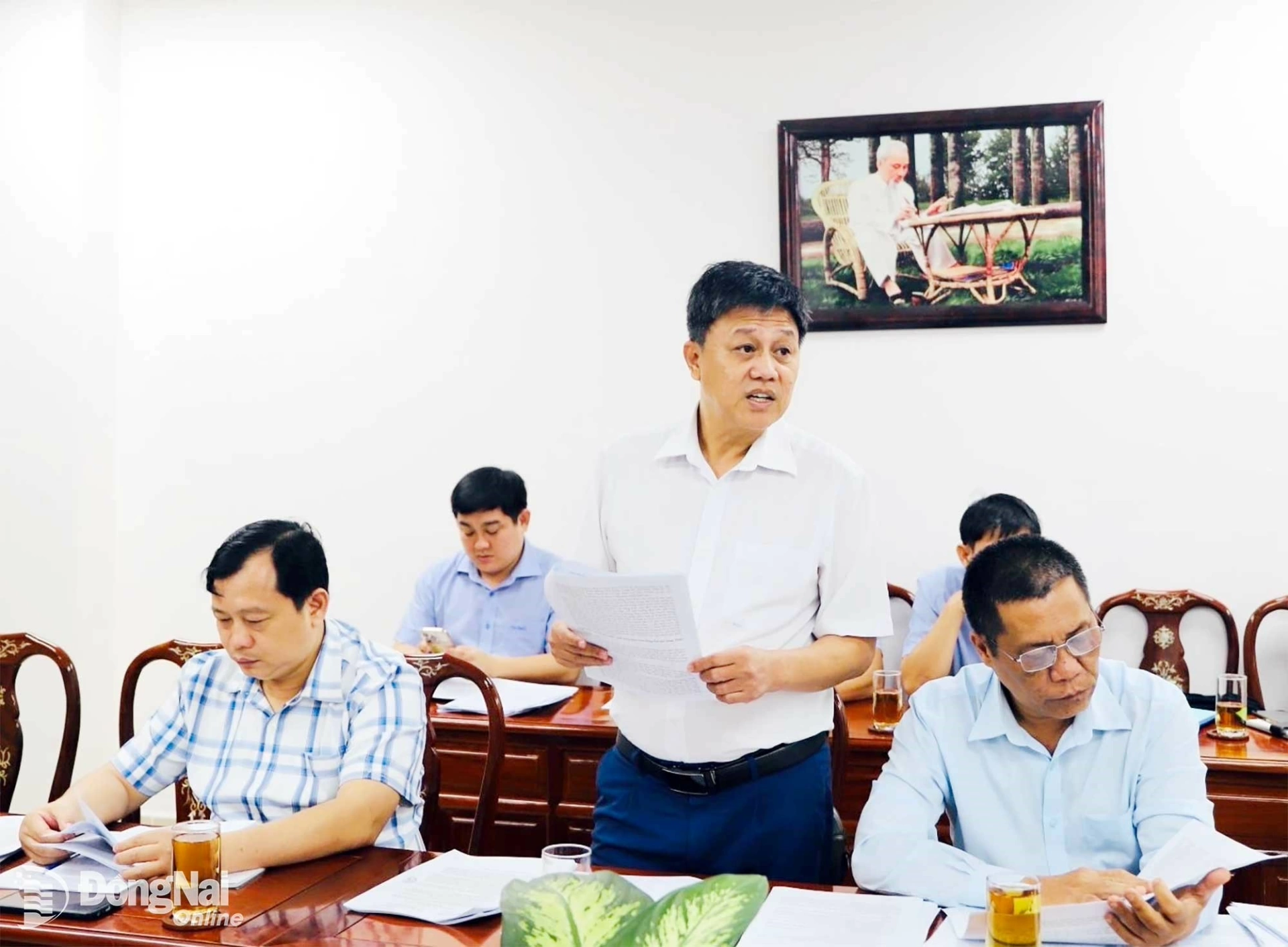 |
| Vo Van Dinh, Deputy Director of the Dong Nai Department of Agriculture and Environment, delivers a report at the session. Photo: B. Nguyen |
In the area of former Binh Phuoc Province, 100% of rural households also have access to hygienic water. From 2021 to 2025, the province did not invest in rural clean water infrastructure using state budget funds. Instead, local water supply enterprises invested in approximately 320 kilometers of pipelines, providing water to more than 5,800 households.
To date, the former Dong Nai province has 91 centralized rural water provision projects, including 52 in operation and 39 inactive. The former Binh Phuoc province has 48 projects, with 32 in operation and 16 no longer active.
Current challenges include the fact that most water supply companies have not been assigned specific service areas, making it difficult for them to develop long-term investment plans. Inconsistent infrastructure planning has also caused delays in several projects. In some areas, planning constraints prevent investment in water supply networks, while approved clean water prices remain high compared to income levels of rural residents.
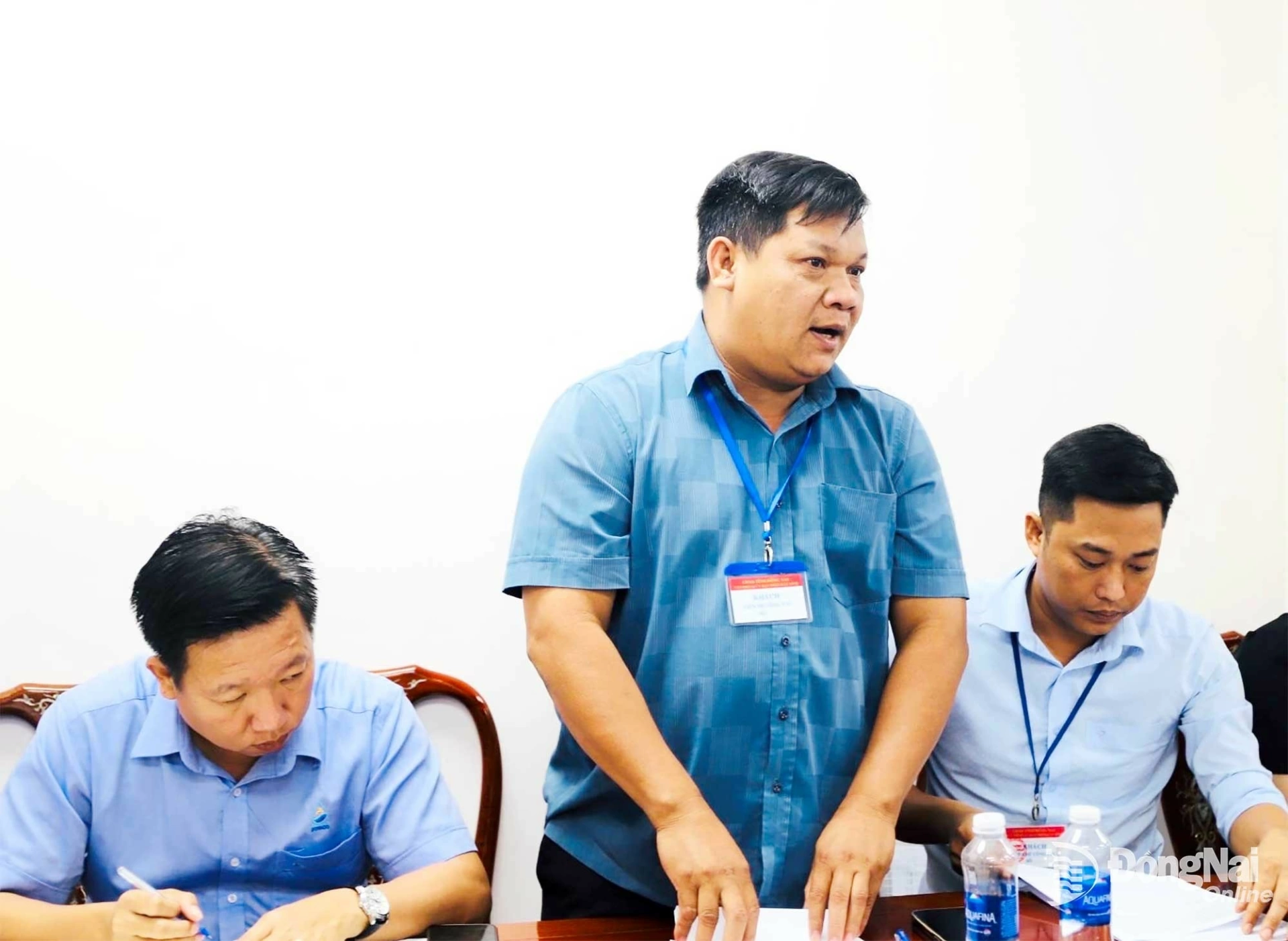 |
| A representative of the enterprise investing in the rural clean water supply project in Dau Giay commune speaks at the session. Photo: B. Nguyen |
For the 2026-2030 period, Dong Nai province will continue implementing projects carried over from 2025 and invest in 10 new rural clean water works, supplying water to approximately 137,200 residents with a total investment of more than 680.7 billion VND. The province will also continue upgrading, repairing, and expanding water supply pipelines, with total planned investment exceeding 2.5 trillion VND.
 |
| A representative of the enterprise investing in the water supply project in Binh Long ward presents comments during the session. Photo: B. Nguyen |
Vice Chairwoman of the Dong Nai People’s Committee Nguyen Thi Hoang emphasised that the province has set a goal for 2030: 85% of rural households will have access to clean water meeting national standards. Of this figure, 68% is expected to come from centralized water supply systems and 17% from household-level systems or filtration devices. She noted that achieving this target requires substantial effort and instructed the Departments of Construction, Agriculture, and Environment to review all planned rural clean water projects to ensure they are incorporated into the provincial master plan.
The province will issue a directive requiring communes and wards to reassess the suitability of existing centralized water supply systems, define investment zones, and avoid overlapping projects. “This is a matter of investment planning,” she stressed, adding that areas lacking water systems should attract investment, while sparsely populated locations should be supported in installing household filtration systems. She also tasked the Department of Agriculture and Environment with reviewing local reservoirs to identify those with reduced irrigation demand so that water can be reallocated for domestic use, thereby improving reservoir efficiency.
Regarding the 2026-2030 rural clean water investment plan, the Vice Chairwoman requested that the Department of Agriculture and Environment coordinate with the Department of Construction to finalise the plan based on practical feedback from local communes and wards.
By Binh Nguyen – Translated by Hong Van, Thu Ha


Thông tin bạn đọc
Đóng Lưu thông tin