
Part 2:
Paving the way with major transportation projects
Identifying infrastructure “bottlenecks” in the southern key growth region, the provincial Plan and Party Congress Resolution has prioritized developing modern, integrated, and multi-modal infrastructure as a strategic breakthrough to expand development opportunities, shape new urban landscapes, and drive sustainable growth.
 |
|
Huong Lo 2 Road is being developed to link National Highway 51 with the Ho Chi Minh City - Long Thanh - Dau Giay Expressway, providing a parallel route to National Highway 51. |
Dong Nai is fast-tracking a series of major transportation projects, establishing new “arterial routes” that seamlessly connect the province internally and with surrounding regions.
“Flagship projects” that define the development landscape
The Huong Lo 2 Road and its extension, currently under construction or soon to be implemented, will connect National Highway 51 with the Ho Chi Minh City - Long Thanh - Dau Giay Expressway. Once completed, the entire route will offer a new and more convenient travel corridor between Dong Nai and Ho Chi Minh City in both directions.
 |
|
The Bien Hoa - Vung Tau expressway, a strategic link between Dong Nai and Ho Chi Minh City, is slated for completion and opening by the end of 2025. |
The Bien Hoa - Vung Tau Expressway is a strategic corridor connecting Dong Nai with Ho Chi Minh City, providing a direct trade route between industrial parks and major logistics hubs, seaports, airports, and tourist destinations. Set to open in December, the expressway will alleviate congestion on National Highway 51, reduce travel times from industrial parks to ports and airports, and enhance connectivity for areas of the former Ho Chi Minh City and Ba Ria – Vung Tau that traverse Dong Nai.
Ho Chi Minh City’s Ring Road 3, a key artery connecting major economic hubs in the Southeast, forms a strategic corridor that drives urban growth in the city. The nearly 10 km section through Dong Nai directly connects to the Ho Chi Minh City - Long Thanh - Dau Giay Expressway and the extended Huong Lo 2 Road, creating an industrial–urban–service development axis along the Dong Nai River. The Nhon Trach Bridge serves as a critical landmark, overcoming the area’s historical isolation.
The elevated highway along National Highway 51, running from the Vung Tau intersection to the junction of Vo Nguyen Giap Road and the Bien Hoa – Vung Tau Expressway, has been approved in principle by the Dong Nai Provincial Party Standing Committee, with the provincial People’s Committee green-lighting the investor to submit a project proposal. Construction is targeted to start by the end of 2025.
Vo Tan Duc, Deputy Secretary of the Provincial Party Committee and Chairman of the Dong Nai People’s Committee, stated that the project is designed not only to build a modern, integrated transport network and address persistent traffic congestion, but also to raise technical standards and create a contemporary, well-planned urban environment.
The Bien Hoa - Vung Tau urban railway lines and Bien Hoa – Suoi Tien metro lines are expected to strengthen the region’s multi-modal transport network, alleviate road congestion, and establish a modern public transit system. The Bien Hoa – Suoi Tien line, in particular, will link Dong Nai directly to Ho Chi Minh City’s metro network, forming the first inter-regional urban transit loop in southern Vietnam.
A key transport milestone for southern Dong Nai will be the construction of its network of connecting bridges. The province has proposed that Ho Chi Minh City join in building three road bridges over the Dong Nai River: Cat Lai, Dong Nai 2, and Phu My 2. These crossings are set to become “golden links” between the region’s two major industrial and urban hubs, opening up new avenues for urban expansion and economic growth.
 |
|
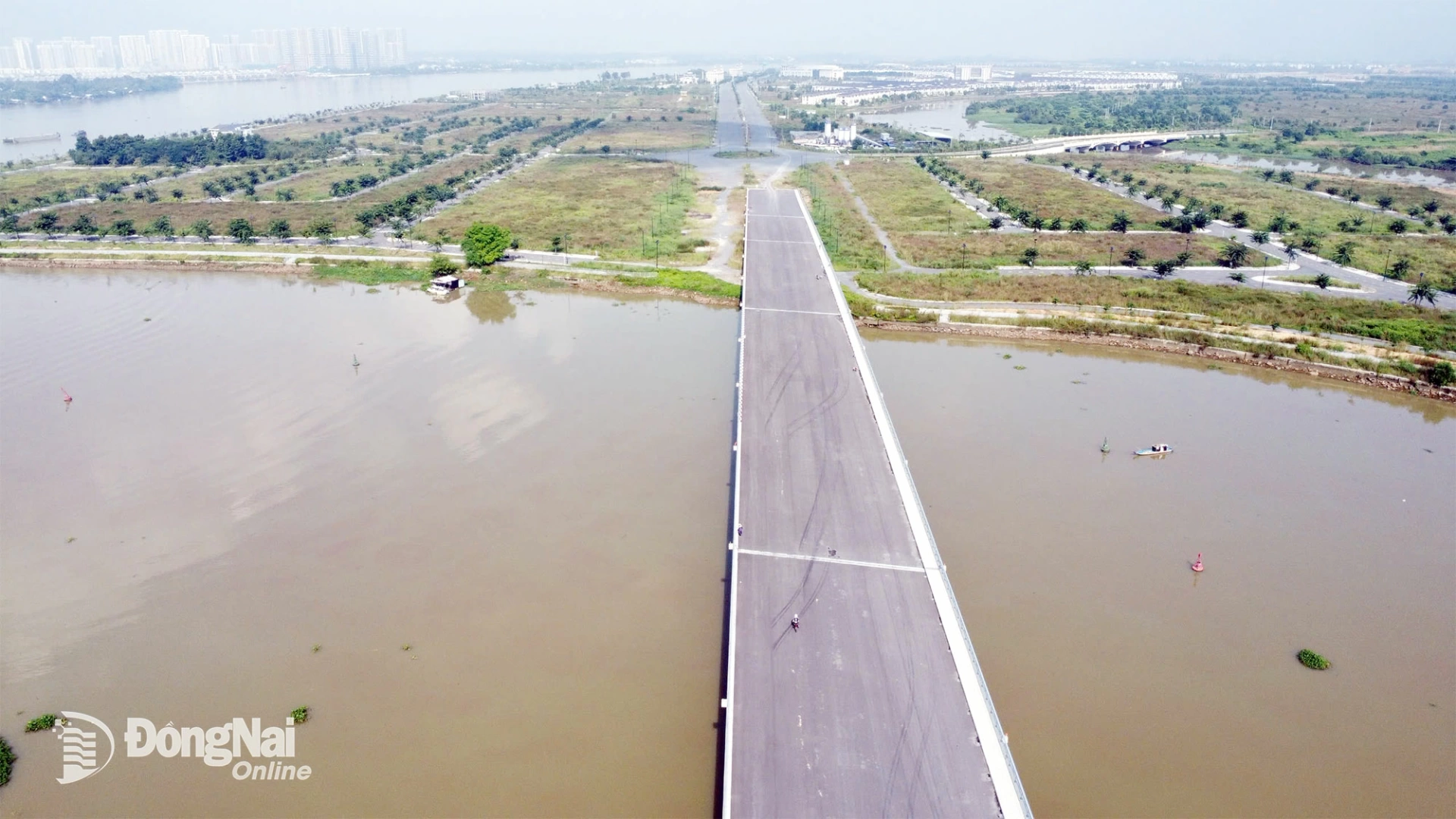
The Vam Cai Sut Bridge on Huong Lo 2 Road is now complete, linking both sides of the road and providing direct access to the Ho Chi Minh City – Long Thanh – Dau Giay Expressway. |
A real estate investor in Long Hung ward emphasized the strategic importance of bridges connecting Ho Chi Minh City and Dong Nai, particularly after the provincial merger, as regional connectivity demand rises. The new bridges, together with Ho Chi Minh City’s Ring Roads 2 and 3 connecting to Hanoi Highway, Huong Lo 2 Road, and National Highway 51, will establish a major transport corridor linking Tan Son Nhat and Long Thanh airports. Beyond improving mobility, these crossings will link key riverside urban developments, including Aqua City, Long Hung, Amata Long Thanh, and KN Bien Hoa (Bien Hoa New City), supporting sustainable urban growth and economic development along the Dong Nai River.
In addition to the three planned bridges, Dong Nai is advancing plans for a new river crossing linking to Ho Chi Minh City’s Ring Road 3, situated between the Dong Nai 1 and Dong Nai 2 bridges. Once completed, the project is expected to accelerate urban development in Long Hung and Phuoc Tan, unlocking the area’s real estate potential while also creating a dynamic riverside urban landscape that attracts investment and drives local economic and social growth.
As the Southeast region advances transport integration and urban development along the Dong Nai River, improving connectivity between Ho Chi Minh City and Dong Nai has become a pressing priority. These projects are expected not only to relieve current traffic congestion but also to drive economic and social growth across the region. Upon completion, they will cut travel times, enhance trade, attract investment, and establish a continuous development corridor linking the area’s two major economic centers.
Strategic corridor linkage
 |
|
Long Thanh International Airport, situated in Dong Nai's primary economic driving zone, is expected to be completed by the end of this year, with commercial operations scheduled to commence in 2026. |
Under Dong Nai’s provincial plan, the Bien Hoa - Long Thanh - Nhon Trach area has been designated the “golden development triangle.” This strategic corridor links ecological urban centers with existing and new riverside developments, positions Long Thanh International Airport as a national aviation hub, and connects the Phuoc An - Thi Vai - Go Dau port cluster as a gateway for international logistics. Economic activity along this corridor is expected to generate spillover effects across the province and the wider Southeast region, reinforcing Dong Nai’s role as a strategic satellite hub for Ho Chi Minh City.
Dr. Tran Du Lich, Member of the National Monetary Policy Advisory Council and of the Dong Nai Province’s socio-economic advisory team, highlighted southern Dong Nai as the core of the province’s and Southeast region’s strategic development corridor. He noted that with coordinated investment in transport infrastructure, the area could achieve the scale and competitiveness of Asia’s modern industrial cities. He emphasized the importance of accelerating the completion of Ho Chi Minh City’s Ring Roads 3 and 4, as well as developing a rail connection linking international border gates, the airport, and seaports, thereby creating a seamless corridor to support sustainable regional growth.
 |
|
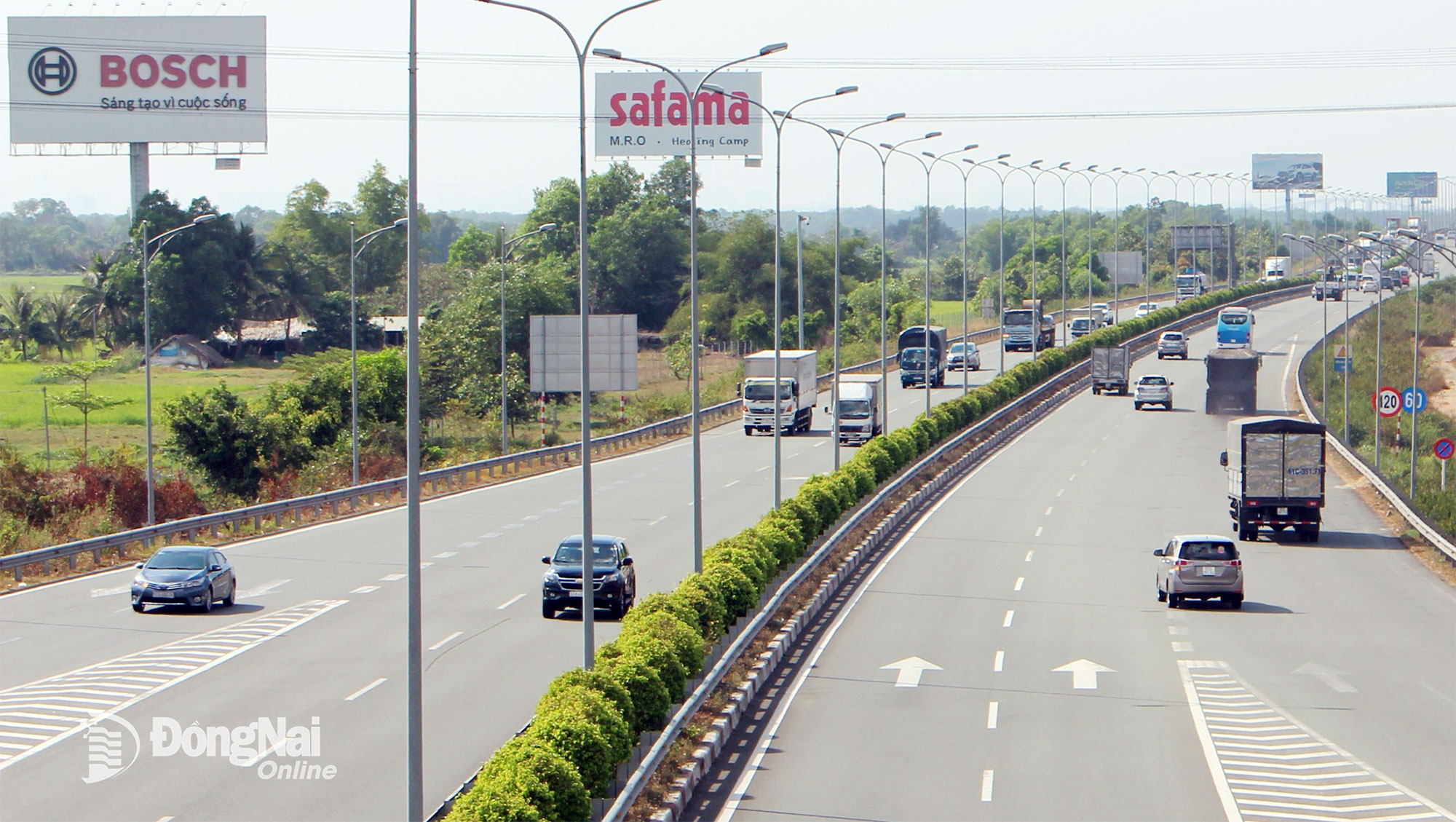
The Ho Chi Minh City - Long Thanh - Dau Giay Expressway is currently undergoing an upgrade and expansion. |
With a series of large-scale transport projects underway or soon to be launched, Dong Nai’s primary economic driving zone is expected to make a significant breakthrough, opening up new development space and laying the groundwork for urbanization, industrialization, and effective regional connectivity. To ensure these routes truly become “economic arteries”, the province is revising its master plan and has proposed that the central government consider applying several special regulatory mechanisms.
Vo Tan Duc, Deputy Secretary of the Provincial Party Committee and Chairman of Dong Nai People’s Committee, stressed that fully realizing the potential of these transport routes requires a comprehensive strategy, coordinated mechanisms, and strong commitment from both the government and local communities. He added that Dong Nai urgently needs the central government to grant special policies and regulatory frameworks similar to those given to Hanoi, Ho Chi Minh City, Da Nang, and Khanh Hoa Province to unlock the province’s full potential, drive regional growth in Southeast Vietnam, and contribute meaningfully to the nation’s overall development.
By PV – Translated by Tam Binh, Minho


Thông tin bạn đọc
Đóng Lưu thông tin