
On the afternoon of October 8, as part of the thematic seminar titled “Implementing Resolution No. 57-NQ/TW: Promoting science, technology, innovation, and digital transformation for a sustainable Dong Nai” under the framework of TechFest Dong Nai 2025, leading experts and speakers delivered strategic presentations that provided a comprehensive overview ranging from digital government, digital infrastructure, digital economy, smart urban areas to enterprise digital transformation, and strategic technologies.
At the seminar, the speakers also offered practical recommendations to help Dong Nai concretize the Party Central Committee’s strategic directions into practical solutions. These proposals aim to lay a robust foundation for socio-economic growth, with a particular focus on achieving the province’s ambitious goal of double-digit economic growth.
DANG TUNG ANH, Deputy Director of the Center for Technology - Digital Government (under the National Digital Transformation Agency, Ministry of Science and Technology): Dong Nai should develop a provincial digital architecture framework integrated with national databases
Dang Tung Anh, Deputy Director of the Center for Technology - Digital Government under the National Digital Transformation Agency (under the Ministry of Science and Technology), emphasized that the overall national digital architecture framework (abbreviated as the National Framework) aims to define the country's digital architecture model. It identifies the most basic and shared components for agencies across all levels of the political system, ensuring network security, information security, connectivity, sharing, and the daily use of resources and data. This approach helps prevent duplication on a national scale, supports socio-economic development, and benefits people and businesses. Additionally, it helps save costs through shared platforms and data, reduces redundant investments, increases transparency through open data, enhances accountability and social participation, and improves satisfaction among citizens and businesses.
 |
| Dang Tung Anh, Deputy Director of the Center for Technology - Digital Government (under the National Digital Transformation Agency, Ministry of Science and Technology), delivers a keynote presentation at the seminar. Photo: Hai Quan |
For localities such as Dong Nai, it is crucial to develop a provincial-level digital architecture framework. If the national digital architecture framework is adopted entirely, a separate issuance might not be needed. However, in cases where additions or modifications are necessary, the province should issue its own digital architecture framework based on the national model. Important focus areas include integration with national databases, use of shared digital platforms, infrastructure review, and data standardization.
Localities should also refer to Decision No. 2618/QĐ-BKHCN dated September 11, 2025, issued by the Ministry of Science and Technology, which details the list and implementation plan for national digital platforms. Additionally, utilizing shared digital platforms for specific sectors and regions should help prevent overlapping investments.
Tran Minh Tuan, Director of the Department of Digital Economy and Digital Society (under the Ministry of Science and Technology): Proposal for a sandbox mechanism to pilot a cashew nut trading platform project
According to Tran Minh Tuan, Dong Nai’s cashew nut products have numerous strengths and advantages in export markets. Therefore, implementing a digital trading platform for these cashew nuts will yield significant benefits and meaningful results.
Specifically, this trading platform aims to improve supply chain transparency by using new technologies such as blockchain and QR code-based traceability for cashew nut products. This method will help ensure product quality and boost the value of Dong Nai’s cashew nuts.
 |
| Tran Minh Tuan, Director of the Department of Digital Economy and Digital Society (under the Ministry of Science and Technology), delivers a keynote speech at the workshop. Photo: Hai Quan |
Tran Minh Tuan further shared that the trading platform will be integrated with numerous utilities to optimize transactions, thereby helping to eliminate intermediaries and maximize export value. Additionally, the platform can assist in analyzing and forecasting global cashew market fluctuations through its database and the application of artificial intelligence. In the near future, the Department of Digital Economy and Digital Society will support the Department of Science and Technology of Dong Nai province in implementing this model.
Tran Giang Khue, Head of the Southern Office of the Intellectual Property Department: Developing a comprehensive and effective intellectual property system across all stages of innovation
Tran Giang Khue, Head of the Southern Office of the Intellectual Property Department, assessed that Dong Nai holds a strategic position as an industrial “capital” with a large population and area, serving as a vibrant economic hub of the Southern Key Economic Region.
Recently, the province has developed an innovation ecosystem connected to creative research activities and innovation-driven startups, achieving many significant accomplishments. Dong Nai has also implemented numerous policies, programs, and initiatives to support the growth of intellectual property assets.
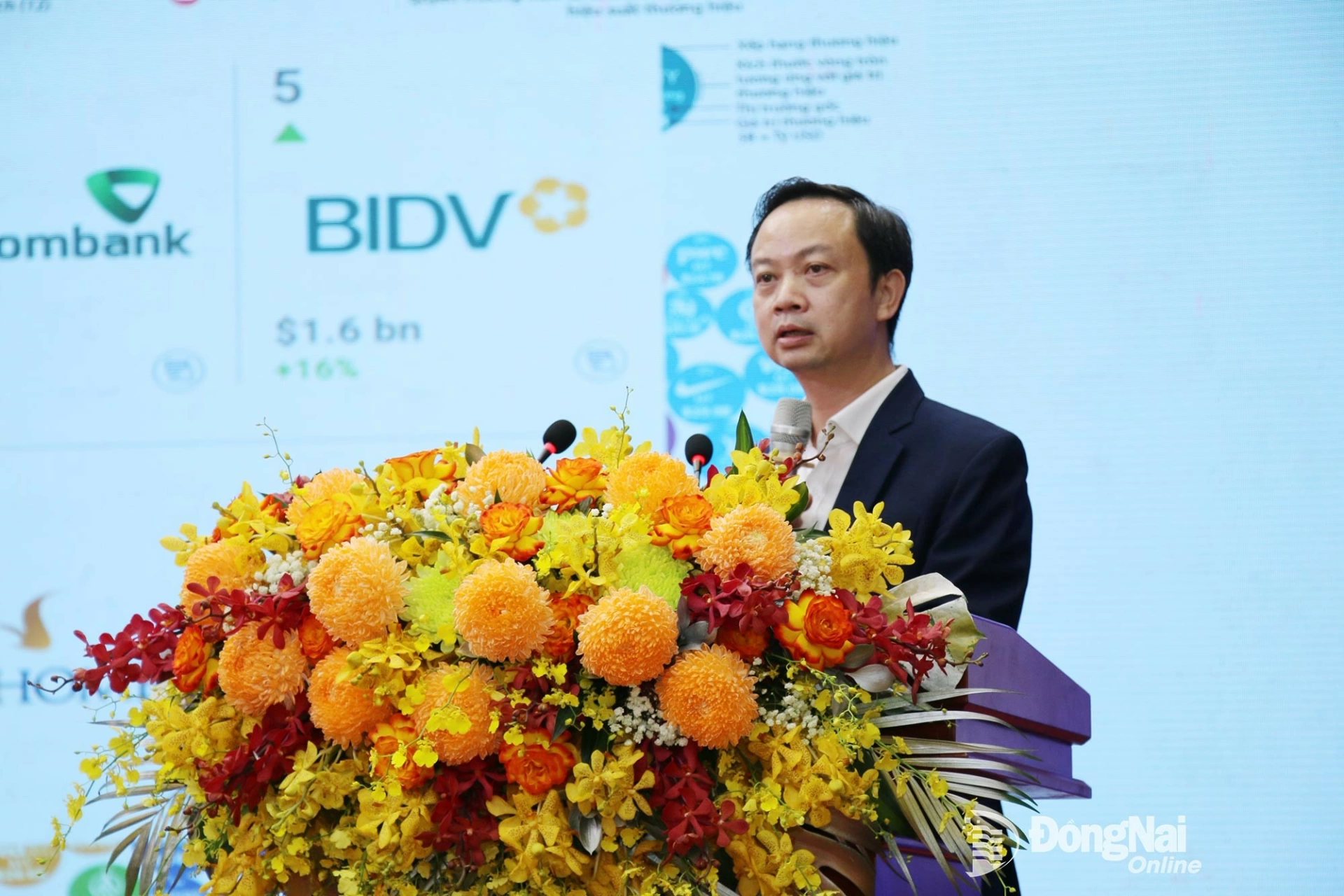 |
| Tran Giang Khue, Head of the Southern Office of the Intellectual Property Department, delivers a presentation at the workshop. Photo: Hai Quan |
According to the 2025 Innovation Index recently released by the Ministry of Science and Technology, Dong Nai province ranks 12th out of 34 provinces and cities nationwide. To improve the innovation index and strengthen local intellectual property activities, Tran Giang Khue, Head of the Southern Office of the Intellectual Property Department, suggested that Dong Nai should develop a comprehensive and effective intellectual property system covering all stages of innovation, including the creation, utilization, and protection of intellectual property rights. This approach aims to foster an environment that encourages innovation. Additionally, administrative procedures should be simplified, and the effectiveness and efficiency of state management over intellectual property must be improved, along with the promotion and enforcement of intellectual property rights.
At the same time, it is advisable for the province to develop and finalize a strategy for human resource development in science, technology, and innovation overall, with a particular focus on intellectual property. A key solution is to establish and expand a network of support and technology transfer centers, along with intellectual property services at research institutes, universities, and businesses.
Bui Tien Dung, Director of Enterprise Customer Division at Vconnex: IoT solutions aligning with Dong Nai province’s green growth and sustainable development policies
According to Bui Tien Dung, IoT (Internet of Things) solutions for smart industrial parks, such as remote monitoring and control of equipment, production optimization, predictive maintenance, enhanced security and safety, as well as optimized resource and supply chain management, are urgent needs for manufacturing enterprises today.
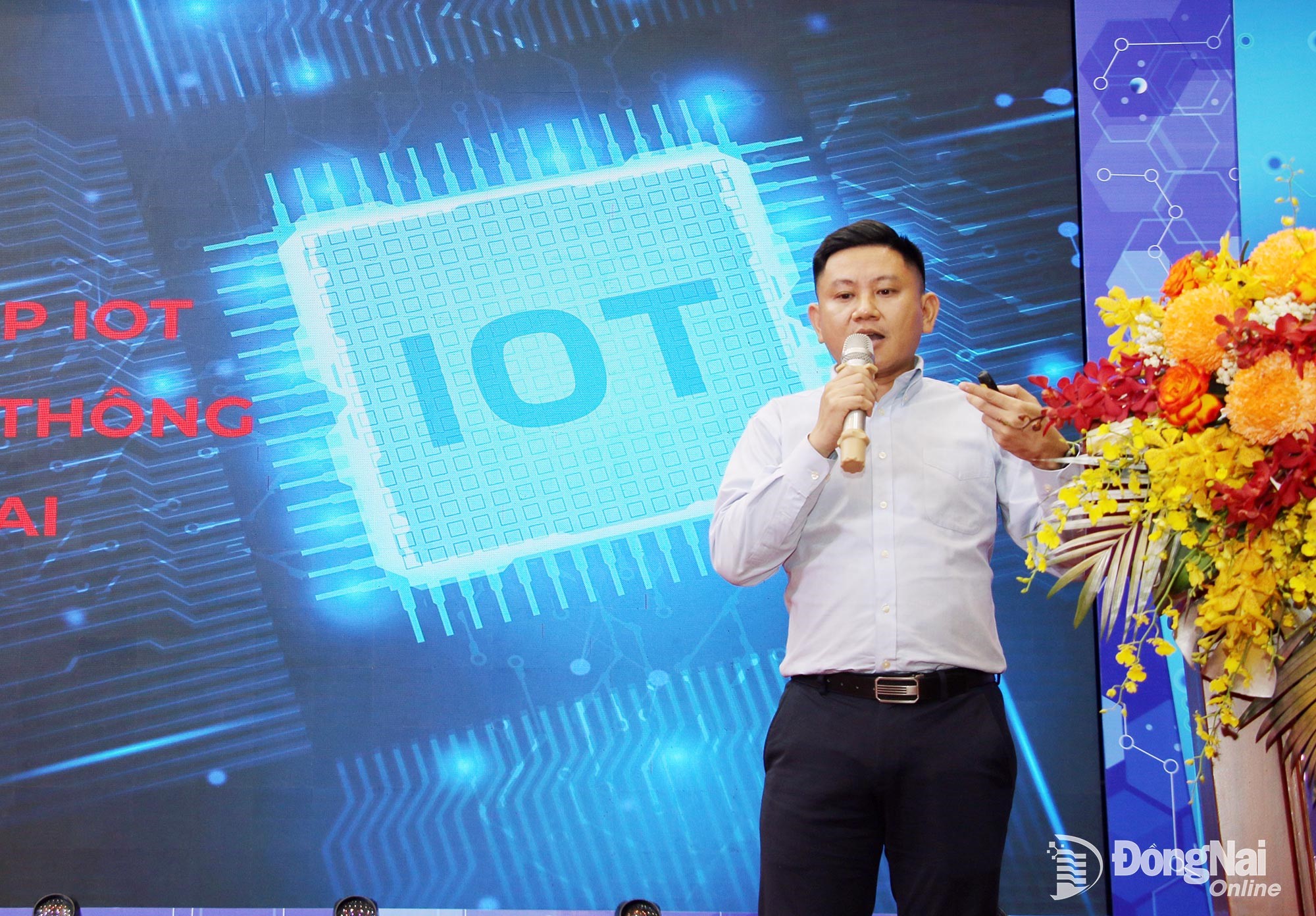 |
| Bui Tien Dung, Director of Enterprise Customer Division at Vconnex, delivers a presentation at the workshop. Photo: Hai Quan |
Notably, Dong Nai province has the highest number of industrial parks in the country, making the implementation of IoT in smart building systems highly advantageous. This approach not only reduces costs but also optimizes operations and improves the quality of the living environment.
From an operational and financial perspective, IoT enables the optimization of resource utilization efficiency. Moreover, the system plays a crucial role in energy savings by controlling and adjusting consumption demands. Additionally, it helps optimize energy costs by analyzing and forecasting consumption needs, as well as effectively leveraging on-site renewable energy sources.
Regarding system management and maintenance, IoT optimizes device installation and performance through analytical capabilities. In particular, it contributes to timely system maintenance by predicting equipment lifespan, thereby minimizing the risk of failures.
Furthermore, IoT applications actively support environmental management and compliance with green standards. Specifically, the system enables the monitoring of carbon emissions and ensures alignment with Dong Nai Province’s policies on green and sustainable growth.
Huynh Luong Huy Thong, Director of the Digital Data Center at VNPT Group: It’s necessary to focus on developing smart industrial parks
To develop smart cities, Huynh Luong Huy Thong emphasized that in the near future, Dong Nai must prioritize groundbreaking tasks. These include building smart industrial parks, managing infrastructure, energy, and the environment, developing digital services, e-commerce, and logistics connected to Long Thanh International Airport, as well as overseeing urban infrastructure, particularly in new metropolitan areas.
 |
| Huynh Luong Huy Thong, Director of the Digital Data Center at VNPT Group, delivers a presentation at the workshop. Photo: Hai Quan |
The Director of the Digital Data Center at VNPT Group also proposed a set of solutions to implement the innovative city model in the province, including establishing an Intelligent Operation Center (IOC), comprehensive integration of data sources, standardizing shared data structure formats, and developing data across sectors to support the development of innovative urban services. Another set of solutions focuses on managing urban planning and smart technical infrastructure. After standardizing data and building the urban infrastructure management platform, it is necessary to integrate and incorporate a Digital Twin platform. This tool is crucial for helping urban authorities digitize current conditions, simulate future scenarios, and make strategic decisions.
Vu Ngoc Dien, Deputy Director of the Digital Infrastructure Center, Viettel Business Solutions (VTS): Digital infrastructure drives innovation in socio-economic development
Vu Ngoc Dien emphasized that digital infrastructure plays a vital role in the province’s development. It drives innovation-led socio-economic growth, boosts labor productivity, attracts investment, and supports the development of high-tech industries and digital services. Providing reliable internet infrastructure allows businesses and residents to access digital services, optimize management and production activities, and enhance quality of life. Furthermore, digital infrastructure helps improve the effectiveness of state management through the use of innovative, secure digital technologies in administration and public services.
 |
| Vu Ngoc Dien, Deputy Director of the Digital Infrastructure Center, Viettel Business Solutions (VTS), delivers a presentation at the workshop. Photo: Hai Quan |
To develop digital infrastructure in Dong Nai, Vu Ngoc Dien recommended that the province should upgrade its telecommunications infrastructure, including expanding fixed broadband coverage to 100% of households, while integrating e-government services to enhance usage efficiency. Additionally, it is necessary to build and upgrade data centers and develop cloud computing infrastructure.
Regarding the information security infrastructure, the province should establish protection systems and upgrade the Security Operations Center (SOC) to broaden its monitoring scope, thereby enhancing the quality and standard of information security protection for all agencies and units in the province. Additionally, solutions for developing policies and training in cybersecurity should be implemented.
Dr. Nguyen Thi Thuy Lien, Deputy Head of the Science and Technology Department (Vietnam National University Ho Chi Minh City): Dong Nai possesses significant advantages to promote the development of the innovation ecosystem
At the workshop, Dr. Nguyen Thi Thuy Lien stated that Dong Nai has many significant advantages to promote the development of its innovation ecosystem and strategic technologies. The province possesses numerous industrial parks, strategic location benefits, key projects and developments, as well as human resource development.
 |
| Dr. Nguyen Thi Thuy Lien, Deputy Head of the Science and Technology Department at Vietnam National University, Ho Chi Minh City, delivers a presentation at the workshop. Photo: Hai Quan |
To enable the “Triple Helix” model between government, universities and businesses, to connect better and effectively implement the provisions of the Politburo’s Resolution No. 57-NQ/TW, the locality must unify and coordinate in developing strategic technology programs, as well as policies and initiatives for science and technology commercialization. Additionally, Dong Nai needs breakthrough policies aimed at fostering practical cooperation among the “Triple Helix.”
By Ha Le, Hai Quan - Translated by Hong Van, Thu Ha


Thông tin bạn đọc
Đóng Lưu thông tin