
This was the theme of a panel discussion held in Dong Nai province on October 2 by the Journalism Professional Training Centre under the Vietnam Journalists Association.
Speaking at the panel discussion, Standing Vice Chairman of the Vietnam Journalists Association Nguyen Duc Loi noted that, in line with the policy on streamlining the apparatus, many provinces and cities have merged their local press agencies in recent years, thereby forming unified, leaner, and more professional newsrooms. This is considered an inevitable step, reflecting political determination while also presenting a new face for Vietnamese revolutionary journalism in the current stage of developmentt.
 |
| Chairing the panel discussion. Photo: Huy Anh |
According to Nguyen Duc Loi, the process is not without difficulty. Alongside opportunities, journalism faces numerous challenges. Many newsrooms have undergone organisational and personnel changes, while several leaders remain inexperienced in managing multi-platform newsroom models.
Meanwhile, the booming development of digital technology and artificial intelligence (AI) is placing the press under mounting pressure to innovate swiftly, while upholding its principles and ensuring accurate and timely information, as well as operating effectively. These are stringent requirements that demand great effort from management agencies, local leadership, and frontline journalists alike.
 |
| An overview of the panel discussion. Photo: Huy Anh |
Deeply understanding the difficulties and concerns of press agencies during their transformation, the Journalism Professional Training Centre and the Vietnam Journalists Association organized the panel discussion on multi-platform newsroom organisation and press content quality management in the current context. The event served not only as an opportunity for experience sharing, but also as a platform for finding solutions to the challenges of organisation, management, and improving information quality in the new era.
Standing Vice Chairman of the Vietnam Journalists Association Nguyen Duc Loi expressed his hope that through the panel discussion, press agencies would gain further motivation and confidence to build modern and professional newsrooms, capable of meeting the requirements of the Party, the State, and the expectations of the people.
 |
| Standing Vice Chairman of the Vietnam Journalists Association Nguyen Duc Loi speaks at the panel discussion. Photo: Loan Phuong |
Discussions at the panel discussion revolved around themes such as: Trends in organising modern newsrooms in the context of multi-platform operations and press consolidation; restructuring of the press system as an inevitable trend and the challenge of effective management; content organisation models – from production to distribution in the digital newsroom; and solutions to improve management capacity, foster leadership skills, and operate local press agencies after mergers.
Emphasising the importance of information connectivity, Nguyen Ngoc Hoi, Deputy Director of the Department of Culture and Sports of Ho Chi Minh City, stated that the city has already implemented the integration of press agencies’ source information with grassroots information systems, as well as the connection of press agencies’ information with grassroots Party cells to disseminate content to cadres, Party members, and the general public. This not only helps the press extend its reach and increase audiences, but also enables local state management agencies to commission content from the press.
 |
| Deputy Director of the Ho Chi Minh City Department of Culture and Sports Nguyen Ngoc Hoi delivers remarks at the panel discussion. Photo: Huy Anh |
From this practical experience, Nguyen Ngoc Hoi proposed that the Authority of Press under the Ministry of Culture, Sports and Tourism adopt a policy on connecting information between central and local press agencies, as well as among agencies within regions. This not only facilitates mutual information support, enriching content across platforms, but also helps reduce costs.
Journalist Hoang Thi Bich Phu, Deputy Editor-in-Chief of Dong Nai Newspaper and Radio, Television, shared that after three months of merging Dong Nai Newspaper, Dong Nai Radio and Television, and Binh Phuoc Radio, Television and Newspaper, while also assuming responsibility for the electronic portals of Dong Nai Party Committee and Dong Nai Province, the newly consolidated agency (Dong Nai Newspaper and Radio, Television) has successfully built a united and cohesive collective, effectively fulfilling its assigned tasks.
According to Hoang Thi Bich Phu, these achievements were made possible thanks to a well-prepared merger plan, strong ideological work, promotion of democracy, and clear delegation of duties. Furthermore, Dong Nai Newspaper and Radio, Television has issued numerous regulations and decisions to ensure effective operations, established councils to serve everyday tasks, and strengthened Party and socio-political organisations. In addition to internal efforts, the unit has consistently received attention and support from the leaders of the provincial Party Committee, the provincial People’s Committee, relevant departments, and the collective responsibility of its staff, reporters, editors, and employees.
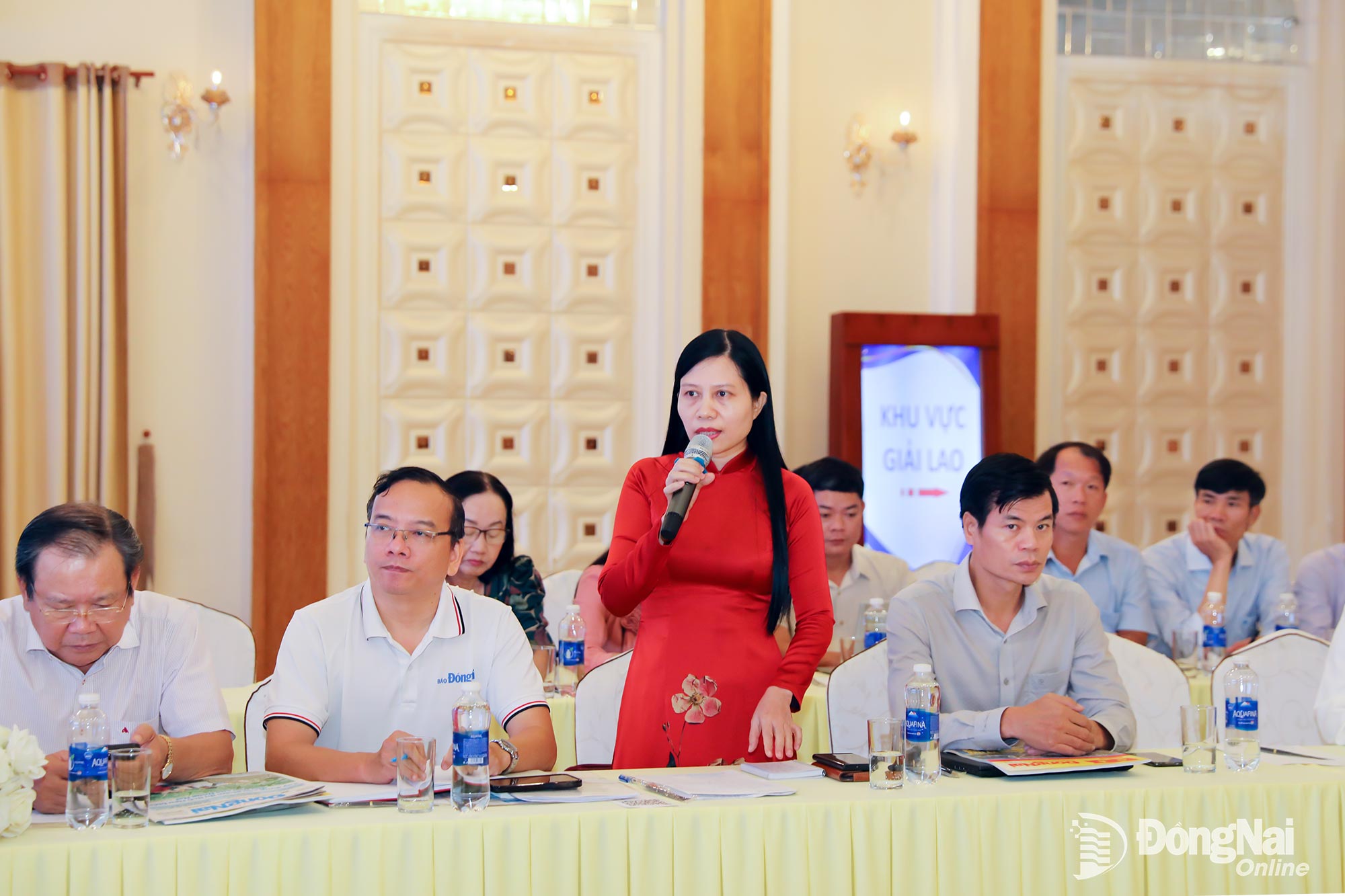 |
| Journalist Hoang Thi Bich Phu, Deputy Editor-in-Chief of Dong Nai Newspaper and Radio, Television, speaks at the panel discussion. Photo: Huy Anh |
To enhance management and operational capacity in line with the convergent, multi-platform, and digital newsroom model, Dong Nai Newspaper and Radio, Television has set out three key solutions. Firstly, every journalistic product is treated as “digital content” serving multiple channels and formats. The agency has developed a comprehensive digital strategy that aligns with data journalism, mobile journalism, and AI-powered journalism. It places digital audiences at the centre, tailoring products to information consumption behaviours across platforms. Secondly, it has established a converged newsroom model that integrates print, online, radio, and television, linked through a central content hub for distribution across newspapers, websites, social media, television, podcasts, and more. Flexible coordination mechanisms have been established to reduce management layers, enhance horizontal communication, save time, and optimize content production workflows. Lastly, the agency focuses on developing high-quality human resources with expertise in technology, digital communication, data analysis, and innovative thinking.
By Nga Son - Translated by My Le, Thu Ha




Thông tin bạn đọc
Đóng Lưu thông tin