
Following the merger of the former Binh Phuoc and Dong Nai provinces into the new Dong Nai province and the implementation of the two-tier local government model, the Provincial People’s Committee assigned the Department of Construction to review and align relevant regulations to carry out the work of establishing, appraising and approving construction planning. In particular, priority is given to selecting 25% of communes and wards for construction planning in 2025, serving as a basis for attracting investment and creating momentum for growth.
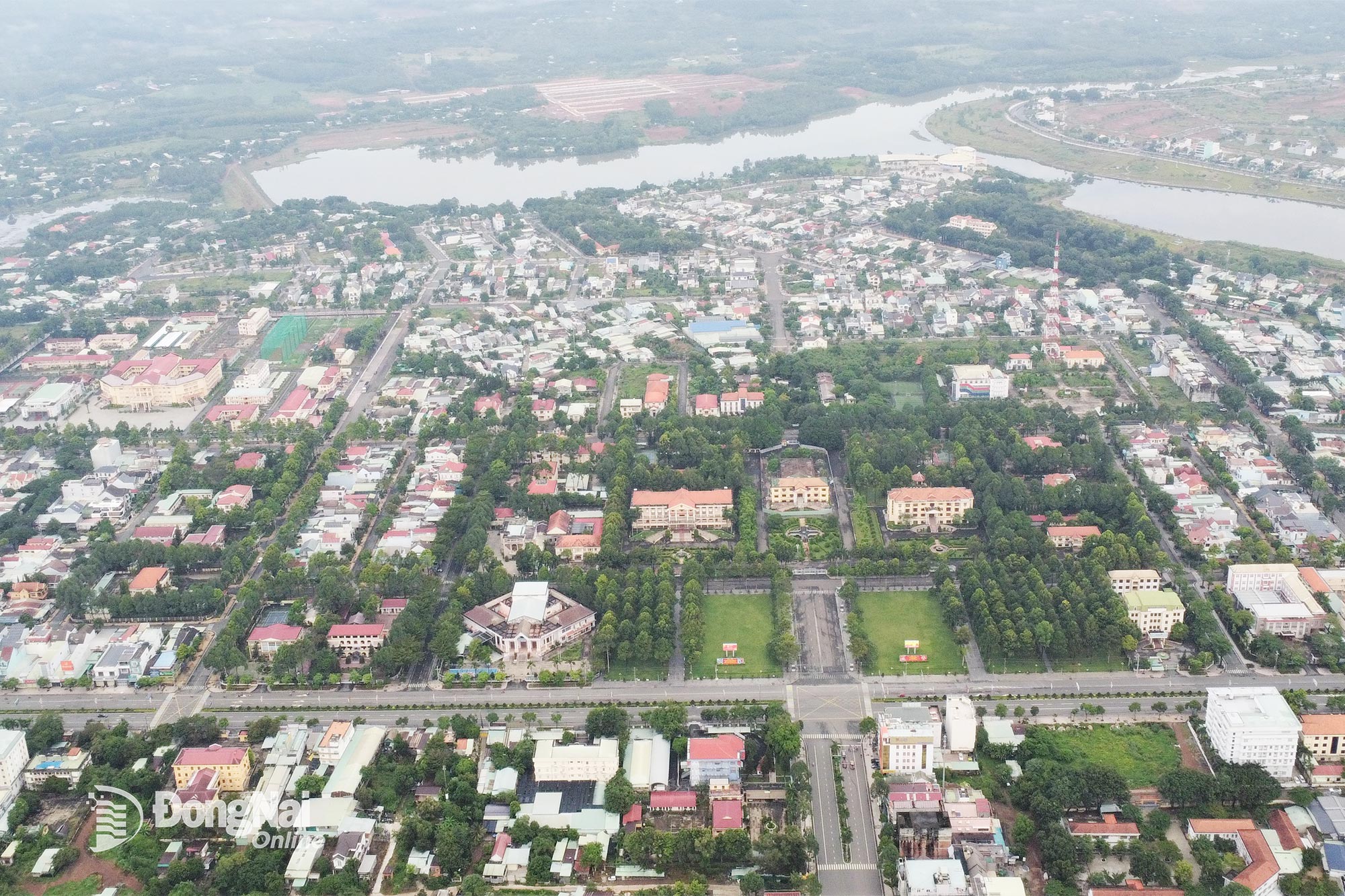 |
| The general urban planning for the expanded Binh Phuoc - Dong Xoai - Dong Phu area is proposed to be developed during the 2025-2026 period |
Expanding planning coverage to 26 communes and wards
Following the direction of the Provincial People’s Committee, the Department of Construction has recently coordinated with relevant agencies and local authorities to develop a plan for implementing urban and rural planning across the province through 2030.
Accordingly, during the 2025-2026 period, planning projects will focus on central urban areas and the province’s dynamic development zones, including general urban plans, zoning plans, and areas designated for urban development. At the same time, efforts will be directed toward completing transportation infrastructure, public services, and industrial-urban zones, as well as prioritizing communes, wards, and key subdivisions to initiate major projects and create a ripple effect in surrounding areas.
Aligned with this orientation, during this period, the Department of Construction has proposed the formulation of 13 general urban plans, 9 general commune plans, and 19 urban zoning plans.
Specifically, for general urban planning projects, 10 new general urban plans will be developed for communes that previously had former townlet areas, including Dau Giay, Cam My, Xuan Loc, Dinh Quan, Tan Phu, Tri An, Tan Khai, Loc Ninh, Thien Hung, and Bu Dang.
At the same time, general inter-ward and existing urban development plans will be prepared for the two inter-ward areas of Binh Long – An Loc and Phuoc Long – Phuoc Binh. Additionally, a general urban plan will be developed for the expanded Binh Phuoc – Dong Xoai – Dong Phu area.
For general commune planning, the Department of Construction has proposed prioritizing the formulation of general plans for nine communes: Minh Duc, Tan Quan, Phu Nghia, Loc Tan, Tan Tien, Da Kia, Dak Nhau, Loc Quang, and Tan Hung. According to Do Thanh Phuong, Deputy Director of the Department of Construction, these communes were prioritized because they are still operating under new-style rural planning schemes approved in 2013, which have yet to be reviewed or updated.
Meanwhile, 19 urban zoning plans proposed during this period are based on the provisions regarding urban areas and functional zones outlined in the Law on Urban and Rural Planning. These zoning plans will be developed for regions that require detailed planning to organize bidding and select investors for land-use projects, as well as for emerging urban zones that play a key role in driving local socio-economic development based on projected population growth.
According to Do Thanh Phuong, with 22 general urban planning projects and 9 general commune planning projects, during the 2025–2026 period, 26 communes and wards will be fully covered by planning, accounting for more than 27% of the province's communes and wards.
Accelerating implementation to attract investment
According to Dr. Truong Minh Huy Vu, Director of the Ho Chi Minh City Institute for Development Studies and Head of Dong Nai Province’s Socio-Economic Advisory Group, the province is currently formulating the adjusted general planning project for the 2021-2030 period to achieve its double-digit growth target. Therefore, with the mindset of “building while running,” Dong Nai also needs to simultaneously develop other plans, including zoning plans. This approach will enable the province to promptly attract investment once the adjusted general plan is approved, without having to wait for other plans to be completed.
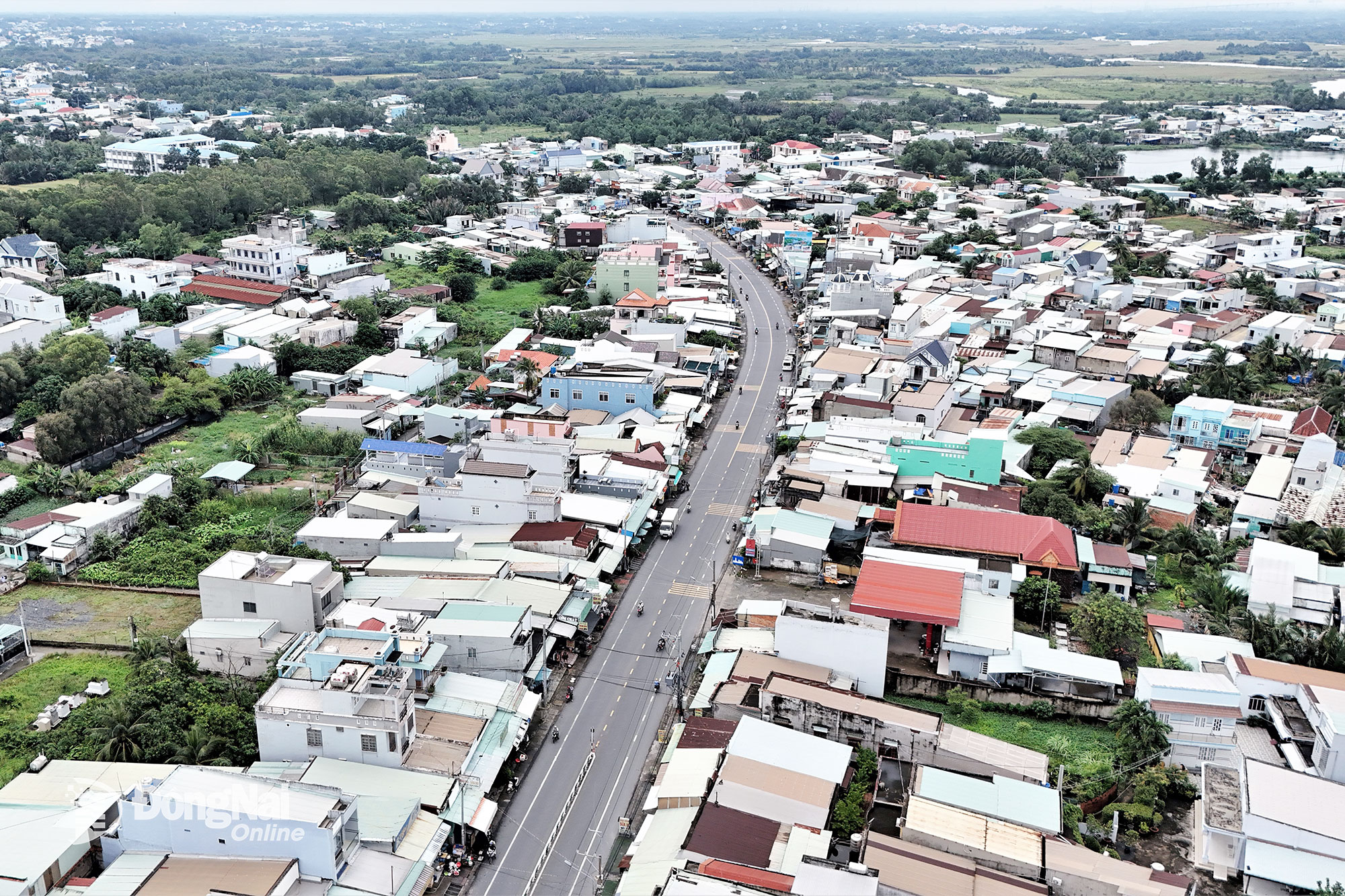 |
| Dong Nai reviews and selects 25% of its communes and wards as priority areas for construction planning, serving as a foundation for investment attraction. Photo: Pham Tung |
In Dong Nai province, Vo Tan Duc, Deputy Secretary of the Provincial Party Committee and Chairman of the Provincial People's Committee, noted that the review and selection of 25% of communes and wards prioritized for construction planning, intended as a basis for investment attraction, remains slower than the directive set by the Provincial People's Committee. As a result, the committee has tasked the Department of Construction with coordinating with the Department of Finance and local authorities to urgently reassess, analyze, and evaluate the current planning status of communes and wards under the new administrative boundaries. Priority will be given to those identified for early planning to help attract socio-economic development projects.
According to the Department of Construction, the estimated budget for implementing general urban plans, general commune plans, and urban zoning plans during the 2025–2026 period is over VND 252 billion. This estimate excludes four general urban planning projects that have already had their planning tasks approved and implementation budgets allocated, as well as two zoning plans currently being prepared by the Provincial Construction Investment Project Management Board.
At the same time, proposals were put forward for planning tasks that could be implemented in parallel with the formulation and adjustment of the provincial master plan. The Standing Committee of the Provincial People's Committee was advised to issue an implementation plan for preparing and approving general commune plans and zoning plans for communes and wards across the province. "This matter is extremely urgent, so the Department of Construction must report to the Provincial People's Committee before October 25, 2025," requested Chairman of the Provincial People's Committee Vo Tan Duc.
By Pham Tung – Translated by Huyen Trang, Minho


Thông tin bạn đọc
Đóng Lưu thông tin