
Developing infrastructure, particularly modern and synchronized transportation systems, has been identified by Dong Nai as one of the breakthrough tasks for the 2020–2025 term.
In recent times, a series of transportation infrastructure projects across the province have been launched, making Dong Nai one of the largest “construction hubs” in the whole country.
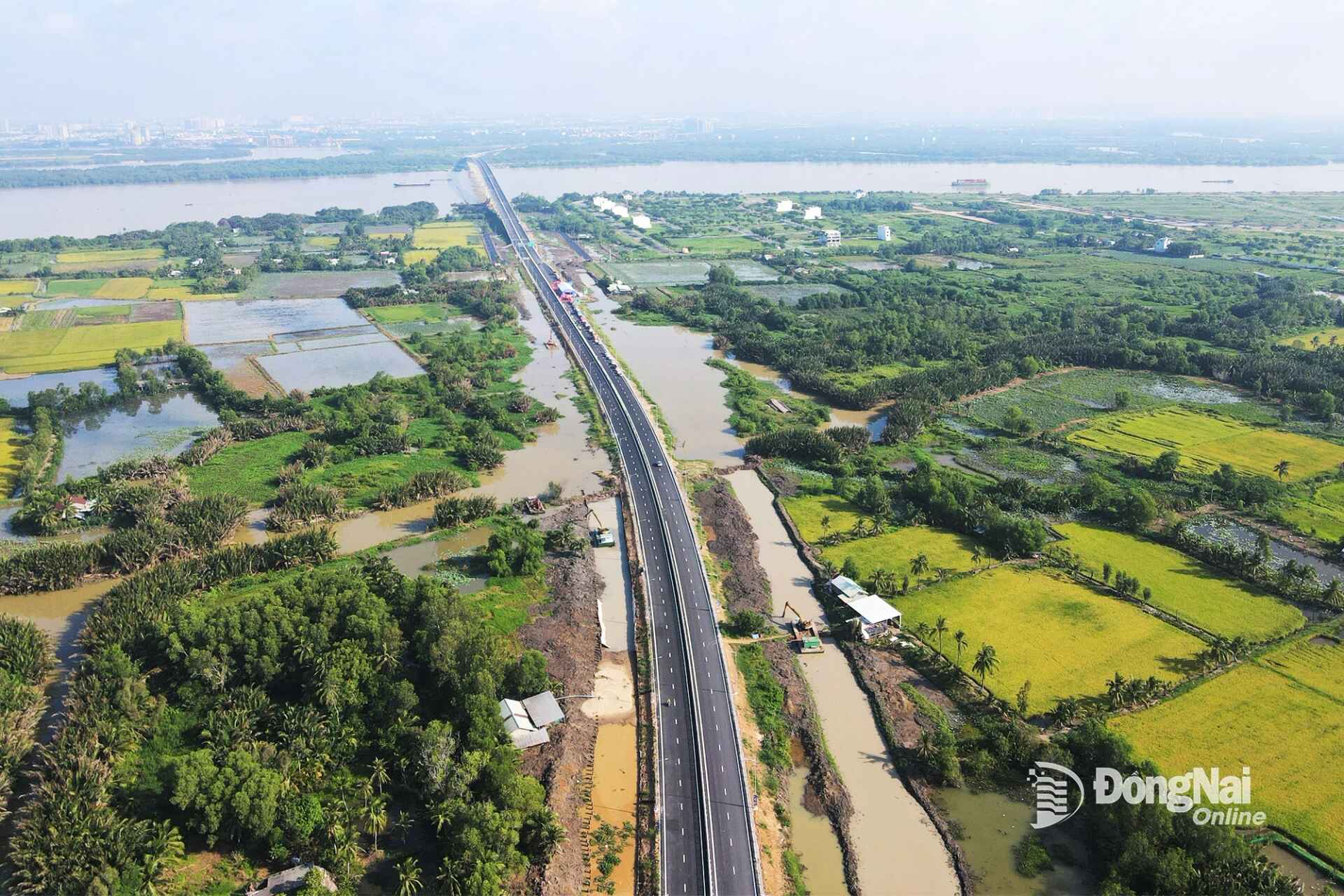 |
| Component Project 1A, which includes the Nhon Trach Bridge on Ho Chi Minh City's Ring Road 3, officially opened on August 20, 2025, establishing a new connection axis between Dong Nai and Ho Chi Minh City. Photo: Pham Tung |
The nation’s major transportation construction hub
Following national reunification on April 30, 1975, Dong Nai province, like the rest of the country, faced countless difficulties stemming from the aftermath of war. Among them, the already outdated transportation infrastructure, further damaged by wartime destruction, became a major bottleneck to development.
At that time, aside from the North–South railway, the province’s transportation infrastructure consisted mainly of roads. The Saigon–Bien Hoa Highway, approximately 30 kilometers long and built in 1962, was considered the most modern roadway of its time.
Tran Quang Toai, M.A., Chairman of the Dong Nai Historical Science Association, recalled that during this period, the road and bridge systems were scarce and severely deteriorated. The rural traffic network in concentrated agricultural areas and new economic zones was limited, insufficient to meet the travel and economic development needs of residents, while most vehicles were outdated.
Through the congresses, the Provincial Party Committee has concentrated on solutions for enhancing transportation infrastructure to support socio-economic development. Since then, the province’s transportation infrastructure system has been progressively invested in and expanded.
Notably, in 2015, the Ho Chi Minh City - Long Thanh - Dau Giay Expressway was completed and officially opened to traffic. For Dong Nai province, approximately 31 kilometers of this route represented the first expressway segments to take shape within the province. For nearly five years afterward, these remained the only expressway kilometers in operation in the area.
By September 30, 2020, when the Phan Thiet - Dau Giay Expressway Component Project, part of the initiative to construct several expressway sections along the eastern North-South route, officially broke ground, the province’s expressway network was effectively “re-launched.” This project marked a significant milestone in a dynamic phase of essential transportation infrastructure projects within the province.
Less than a year later, one of the country’s most significant transportation infrastructure projects, the Long Thanh International Airport Phase 1, officially commenced on January 5, 2021. With a total investment exceeding 109 trillion VND, Long Thanh International Airport Phase 1 was poised to become an international transit airport and a crucial “node” in the transportation infrastructure development strategy for the country as a whole and Dong Nai province in particular in the future. On September 24, 2024, during his fourth on-site inspection of the actual progress at the Long Thanh Airport Project construction site, Prime Minister Pham Minh Chinh underscored that "We must identify this as a symbolic project of the country."
Following the above two projects, in mid-June 2023, alongside other localities, the component projects of the Bien Hoa - Vung Tau Expressway and Ho Chi Minh City’s Ring Road 3, the section passing through the province, were simultaneously launched.
According to the Provincial People’s Committee, there are currently seven expressway and ring road projects under development in the province, including: Bien Hoa - Vung Tau, Ben Luc - Long Thanh, Ho Chi Minh City - Thu Dau Mot - Chon Thanh, Gia Nghia - Chon Thanh, Dau Giay - Tan Phu, the expansion of Ho Chi Minh City - Long Thanh - Dau Giay Expressway, and Ho Chi Minh City’s Ring Road 3. Among them, Component Project 1 of the Bien Hoa - Vung Tau Expressway and Component Project 3 of Ho Chi Minh City’s Ring Road 3, managed by the province for construction, are scheduled to technically open to traffic before December 19, 2025.
Dong Nai has designated 2025 as the “Year of Transportation Infrastructure,” continuing the dynamic pace of infrastructure development in the province with the groundbreaking of several additional key projects. Specifically, on August 19, 2025, alongside the entire country, the province witnessed the groundbreaking, inauguration, and commencement of eight projects to celebrate the 80th anniversary of the August Revolution and National Day on September 2. Among these, five projects commenced construction, including: Component 1 of the Gia Nghia - Chon Thanh Expressway; the expansion of the Ho Chi Minh City - Long Thanh Expressway segment; the Dau Giay - Tan Phu Expressway; the Project for Investment in Construction and Business of Aircraft Maintenance Services No. 3 and 4 at Long Thanh Airport; and the Project for Construction of Ma Da Bridge.
In addition to airport and expressway projects, in mid-February 2025, the province’s transportation infrastructure network received another “highlight” as Phuoc An Port, the largest seaport in the province, officially welcomed its first international ship to dock.
According to Central Party Committee member and Deputy Prime Minister Ho Duc Phoc, with the array of transportation infrastructure projects that have been and are being implemented in the area, Dong Nai has emerged as a major construction hub in the entire country.
 |
| Phuoc An seaport, the largest seaport in Dong Nai province, officially welcomed the first international ship to dock in February 2025. Photo: Pham Tung |
After many years of investment and construction, Dong Nai is now one of the localities with a transportation system that includes almost all means. The province has numerous national arterial roads passing through, such as the North-South railway, expressways, ring roads, National Highway 1, National Highway 20, and National Highway 51.
In addition, strategic transportation hubs such as Long Thanh Airport, seaports, river ports, inland container depots (ICDs), and the international border gate system are also factors creating growth momentum for trade, import-export activities, and foreign investment attraction in Dong Nai Province.
According to Vice Chairman of the Provincial People’s Committee Ho Van Ha, for the Cat Lai Bridge Project connecting Dong Nai with Ho Chi Minh City, the province aims to commence construction in 2026.
Vo Tan Duc, Deputy Secretary of the Provincial Party Committee and Chairman of the Provincial People's Committee, emphasized that in the near future, Dong Nai will have all five modes of transportation: road, rail, air, maritime, and inland waterways. All of these must be carefully planned and invested in to ensure synchronization and connectivity.
Leveraging transport infrastructure as a driver of growth
According to Deputy Prime Minister Ho Duc Phoc, Dong Nai holds a strategic position with substantial potential and advantages for development. The province is home to Long Thanh Airport, multiple seaports, industrial zones, expressways, and soon, railway lines. These elements are interconnected and mutually reinforcing in driving socio-economic development.
In its future development orientation, Dong Nai aims to become a fast-growing, sustainable, green, and modern province, emerging as a leading center for industry, logistics, services, and high-tech agriculture in the country. To achieve this goal, the province recognizes that the transportation infrastructure system, especially regional transportation connectivity, plays a particularly important role.
Dr. Truong Minh Huy Vu, Director of the Ho Chi Minh City Institute for Development Studies and Head of Dong Nai province’s Socio-Economic Advisory Group, stated that Dong Nai will eventually possess all five modes of transportation (road, inland waterways, air, railway, and maritime). However, the current connecting routes of the province still lack synchronization, connectivity, and efficiency. Therefore, it is necessary to accelerate expressway and railway projects, as well as develop inland waterway routes from the Dong Nai River to port clusters and logistics hubs in the Southwest region.
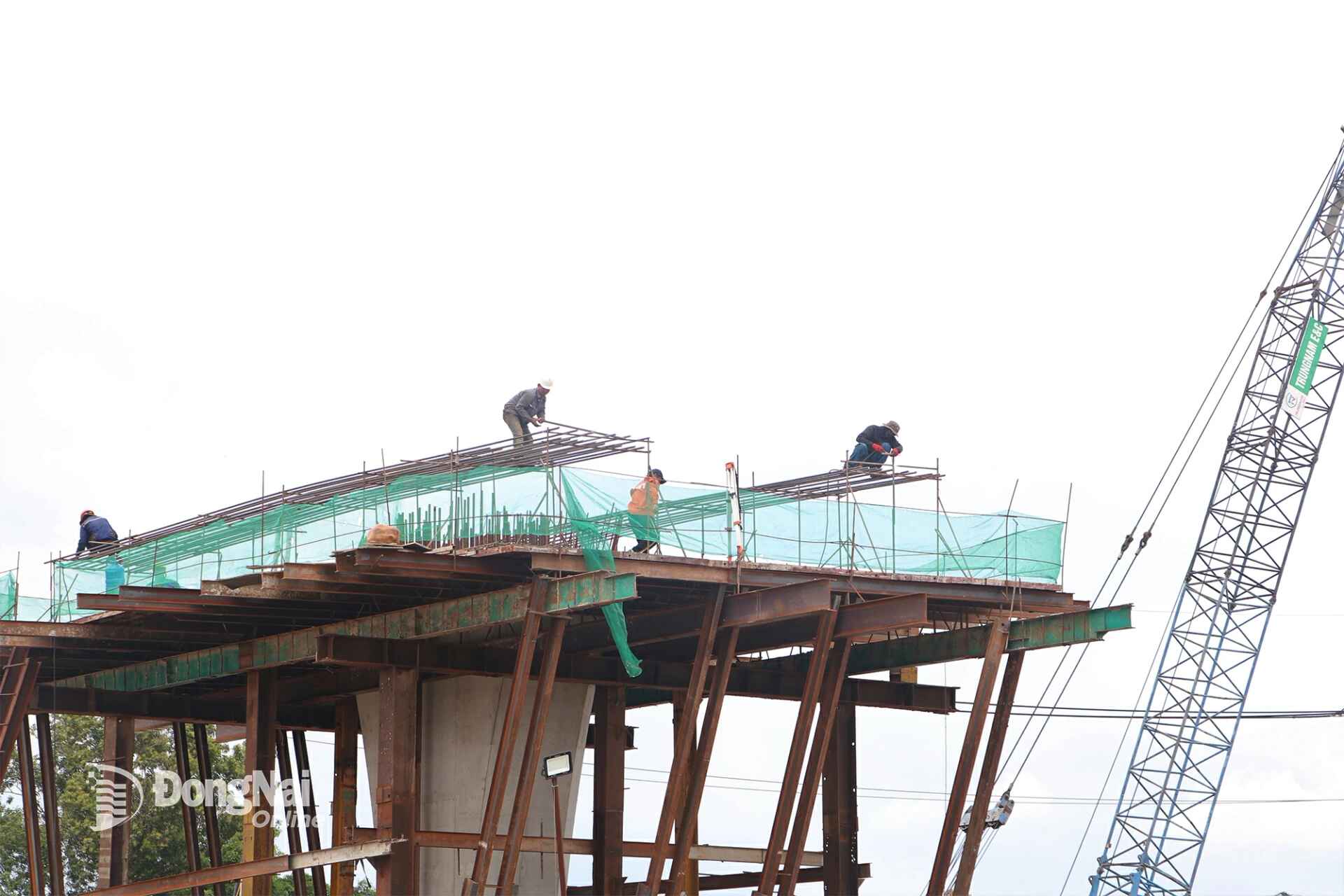 |
| Workers construct the Bien Hoa - Vung Tau Expressway Project the section passing through the province. Photo: Pham Tung |
According to Ho Van Ha, a member of the Provincial Party Committee and Vice Chairman of the Provincial People’s Committee, Dong Nai will prioritize projects that enhance intra-provincial transportation connectivity to Long Thanh Airport, as well as regional connectivity projects, especially routes linking Long Thanh Airport to Ho Chi Minh City, in its strategy for developing the province's transportation infrastructure system in the near future.
With intra-provincial traffic connectivity, following the groundbreaking of the Ma Da Bridge Project, Dong Nai has officially invited investors to participate in the project for the connecting route from Dong Xoai to Ho Chi Minh City’s Ring Road 4 via Provincial Road 753 and Ma Da Bridge, as well as the route linking Ma Da Bridge to Ho Chi Minh City’s Ring Road 4 under a public-private partnership (PPP) model.
“This will be the province’s ‘backbone’ transportation axis, and Dong Nai aims to commence the project in the second quarter of 2026,” shared Vice Chairman of the Provincial People’s Committee Ho Van Ha.
Meanwhile, to complete the road network connecting localities to Long Thanh Airport, as well as linking Long Thanh Airport with Ho Chi Minh City, Dong Nai is advancing the implementation of a series of projects to upgrade, expand, and construct new provincial roads – 769, 773, 770B – and bridges across the Dong Nai River such as Cat Lai Bridge, Long Hung Bridge, and Phu My 2 Bridge.
In the broader picture of Dong Nai province’s future transportation infrastructure, railway lines and urban rail (metro) systems are considered new highlights contributing to the goal of building a modern and synchronized transport network.
According to the planning, three national railway lines will be developed in the province in the near future, including the North-South high-speed railway, the Bien Hoa - Vung Tau railway, and the Thu Thiem - Long Thanh light rail line.
The North-South high-speed railway, segment passing through the province, is expected to be approximately 80 km long, with one passenger station near Long Thanh Airport and one freight station in Trang Bom district. The Bien Hoa - Vung Tau railway, the section passing through the province, is expected to be about 87 km long, including the Trang Bom - Hoa Hung section. Meanwhile, the Thu Thiem - Long Thanh railway, a segment passing through the province, will be approximately 37 km long.
In addition to national railway lines, Dong Nai plans to build metro lines to connect major urban areas and airports. Among these, the extension of the Ben Thanh - Suoi Tien metro line to Tran Bien and Long Thanh Airport is seen as an “initial step” for developing the province’s metro network. For this project, in August 2025, the Provincial People's Committee approved the joint venture of DonaCoop Infrastructure Investment Joint Stock Company and VinaCapital Group as the investor to propose the project under the PPP model.
According to the proposal submitted by the investor consortium, the extension of the Ben Thanh–Suoi Tien metro line to Tran Bien and Long Thanh Airport will include three segments, with a total length of approximately 38.5 kilometers.
The first segment, from Station S0 (Dong Hoa Ward, Ho Chi Minh City) to Station S2.4 at Dong Nai’s new provincial administrative center (located at the current Bien Hoa 1 Industrial Park), is about 6.5 kilometers long. This section is expected to be elevated to reduce construction costs.
The second segment, from the new provincial administrative center to Long Thanh Airport, spans about 27 kilometers with 13 stations and is planned to be fully elevated. It begins at Station S2.4 and extends to Station S16, which connects to the Thu Thiem–Long Thanh railway. From Station S16, passengers will continue approximately 9.5 kilometers on the Thu Thiem–Long Thanh line to reach Long Thanh Airport.
The third segment, from the new provincial administrative center to Tran Bien Ward, is about 5 kilometers long. This portion is planned to run underground from Stations S2.5 and S2.6, connecting with several pre-planned stations.
By Pham Tung - Translated by Huyen Trang, Minho


Thông tin bạn đọc
Đóng Lưu thông tin