
Garments made from brocade fabric by the S’tieng ethnic community in Tan Hung commune captivate many with their unique yet familiar charm.
Since the brocade weaving craft of the S’tieng and M’nong ethnic people in Dong Nai was recognized as a national intangible cultural heritage in February 2024, the movement on preserving and developing this cultural legacy has gained significant momentum. Notably, modernizing traditional attire to align with contemporary fashion trends is receiving growing attention.
A new take on “brocade workwear costumes”
In Tan Hung commune, under the guidance and support of the local Women’s Union, the movement to wear brocade clothing has spread strongly. The initiative has received support not only from S’tieng women but also from women of other ethnic groups, particularly through the model of “brocade workwear costumes”.
Unlike the familiar image of the S’tiêng people in the past - men wearing loincloths and women in wrapped skirts - today’s brocade costumes are being reimagined with a more modern and practical touch.
Thi Gion (a 61-year-old artisan from Tra Thanh Lo O hamlet) is one of the pioneers in designing brocade-based shirts and skirts over 15 years ago when she began using a sewing machine. Her early products received positive feedback and orders from the local community, motivating her to continue her work. As demand grew, she began commissioning other women who knew how to weave. This eventually led to the establishment of the Tra Thanh Lo O brocade start-up wearing Group, with over 30 female members. The group became the first supplier of modernized brocade garments for the Tan Hung Commune Women’s Union.
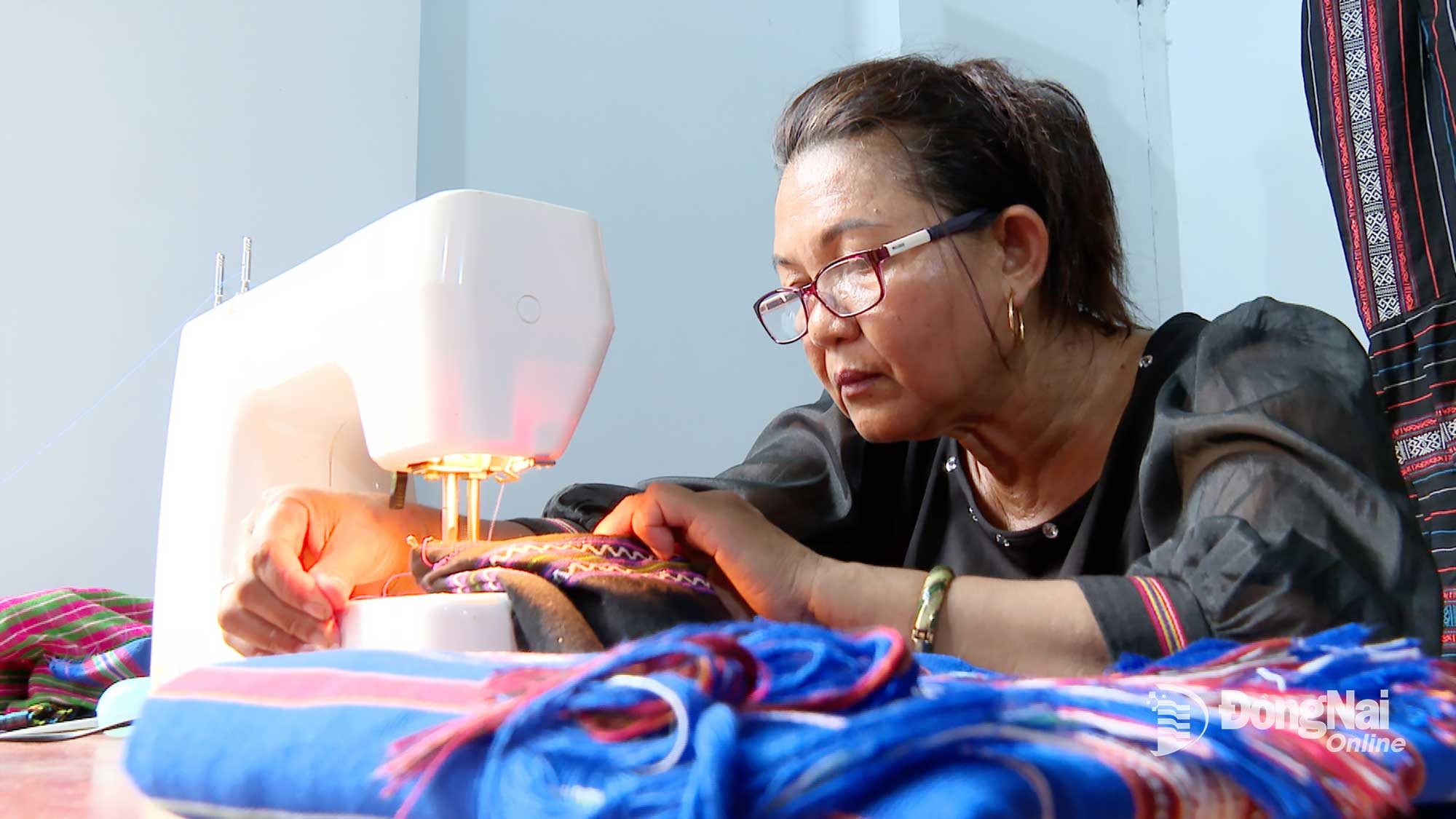 |
| Thi Gion, a pioneer in designing brocade shirts and skirts in Tan Hung commune. Photo: Tu Huy |
“At first, I just wanted to preserve the weaving craft for our younger generations. All started from a desire to wear fashionable clothes made from brocade, which was becoming popular on the market. So I did some research and taught myself how to sew. It was very difficult at first because brocade is thicker and stiffer than regular fabric. I had to use special needles and threads. But over time, I got used to it and gained more experience. Later on, when both ethnic minority women and Kinh women showed their support, I was truly happy.” She recalled.
For nearly two years, many members of the Women’s Union in Tan Hung commune have worn brocade costumes to meetings. Each costume features its own unique design, color, and pattern, creating a striking impression. Regardless of ethnicity, the use of brocade has become a symbol of community solidarity and cultural pride, while also spreading a renewed appreciation for the traditional weaving craft.
 |
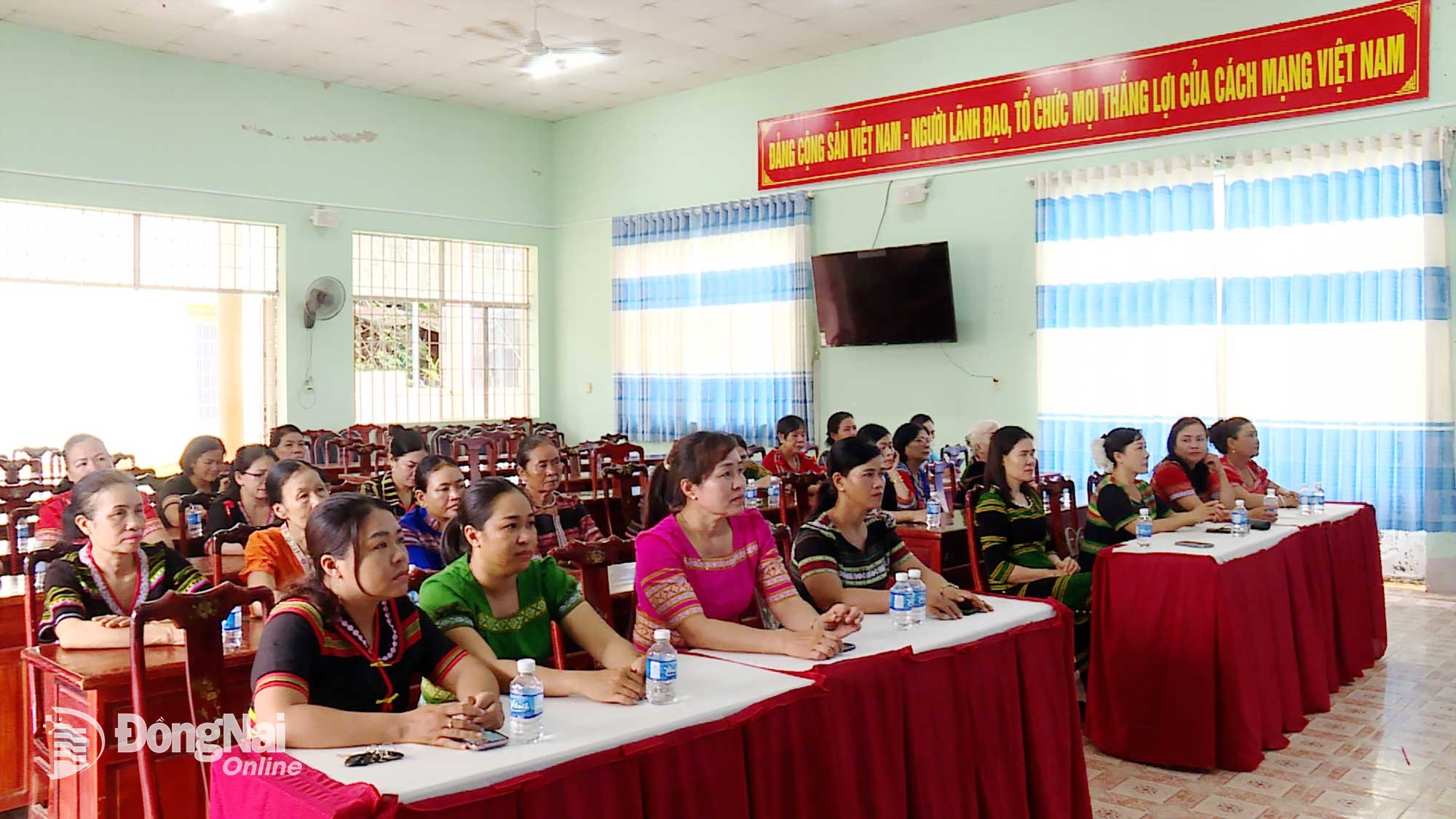 |
| The model of “brocade workwear costumes” has brought a breath of fresh air to the workplace of the women in Tan Hung commune during meetings and gatherings. Photo: Tu Huy |
Dao Thi Kieu Oanh, a Kinh woman and member of the Women’s Union, said: “When I wear a brocade outfit by the S’tieng people, I still feel the graceful, traditional beauty of Vietnamese women. I often wear these costumes to workshops and training sessions…”
Preserving and reigniting pride in the craft
In Bom Bo Commune, modern brocade attire has also gained popularity during festivals and cultural exchanges held at the S’tieng Ethnic Cultural Reserve.
A major milestone came in March 2025, when 70 brocade costumes, handwoven by S’tieng and M’nong women, were showcased for the first time on a professional stage by fashion designer Minh Hanh. These pieces were presented alongside with her brocade designs in the event “A new day on Bom Bo hamlet,” held in the former Bom Bo hamlet, Binh Minh commune, Bu Dang district (now Bom Bo commune, Dong Nai province). The event marked a key milestone in showcasing the high quality of brocade craftsmanship and opened the door to new promotional and market opportunities for local weaving villages.
 |
 |
 |
| Modernized brocade costumes are widely worn at festivals. Photo: Tu Huy |
At present, Tan Hung commune has three brocade weaving groups that are operating regularly. The increasing demand from Women’s Union members has boosted production and helped secure brocade’s solid foothold in contemporary life. Gion proudly said: “Our products are now being purchased not just by S’tieng women, but also by women from other ethnic groups. Their demand for styles are more diverse than before. We’re even selling some items to foreign customers via social media.”
The growing consumption of brocade products have encouraged many S’tieng women to become more patient at the loom, while also developing a greater love for and confidence in their craft. Dieu Thi Hong (a S’tieng woman) shared: “I grew up around the loom, but I wasn’t passionate about it because weaving a single piece of brocade took so much time. But recently, seeing my fellow villagers create beautiful garments made me proud, so I decided to learn the craft again to help preserve it.”
 |
| Expanding market access for brocade products motivates the S’tieng women to actively learn and preserve their traditional weaving craft. Photo: Tu Huy |
Dieu Son Ray, an elder artisan from the Bu Dinh weaving group in Tan Hung commune said: “Long ago, no one taught me so I had to learn on my own. Every pattern must be measured and positioned precisely. If it’s uneven, the whole fabric is ruined. I’m now working to recreate some of the patterns passed down by our ancestors to better serve the weaving group’s needs.”
 |
| Dieu Son Ray (second from left) instructs locals how to use the loom to create patterns on brocade fabric. Photo: Tu Huy |
Le Thi Linh, President of the Women’s Union in Tan Hung commune, affirmed: “Over the past two years, the model of “brocade workwear costumes” has become a major driving force in helping women preserve the craft. When products are sold, they earn additional income, which then becomes a prerequisite to reinvesting in production and continuing to develop the craft.”
By Ly Na
Translated by Minh Hanh – Thu Ha


Thông tin bạn đọc
Đóng Lưu thông tin